
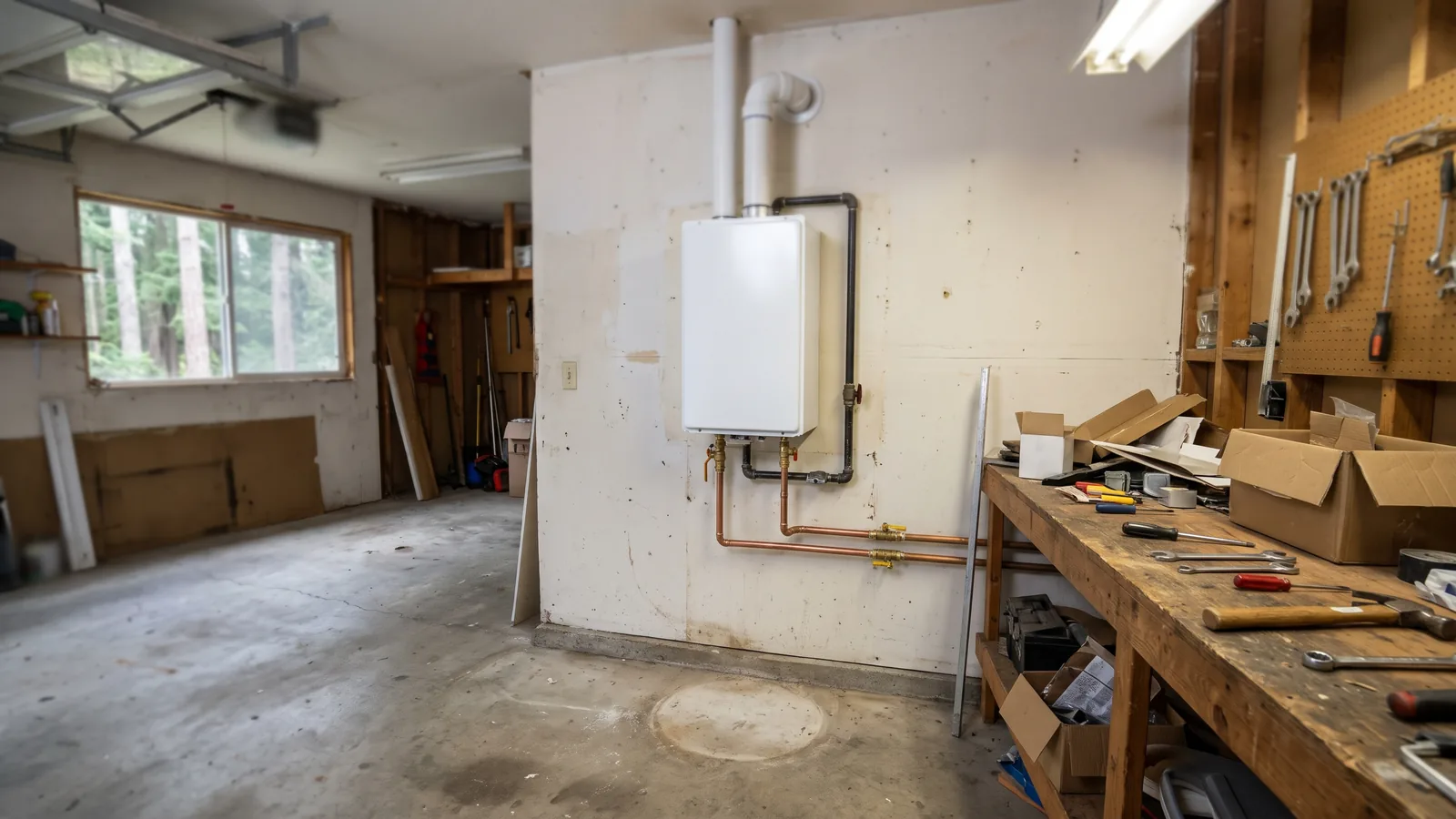
Gas Tankless Water Heater Types for Kent Homes
Natural gas in Kent comes from Puget Sound Energy. Past that, the choice between units comes down to exhaust temperature, fuel and burner size.
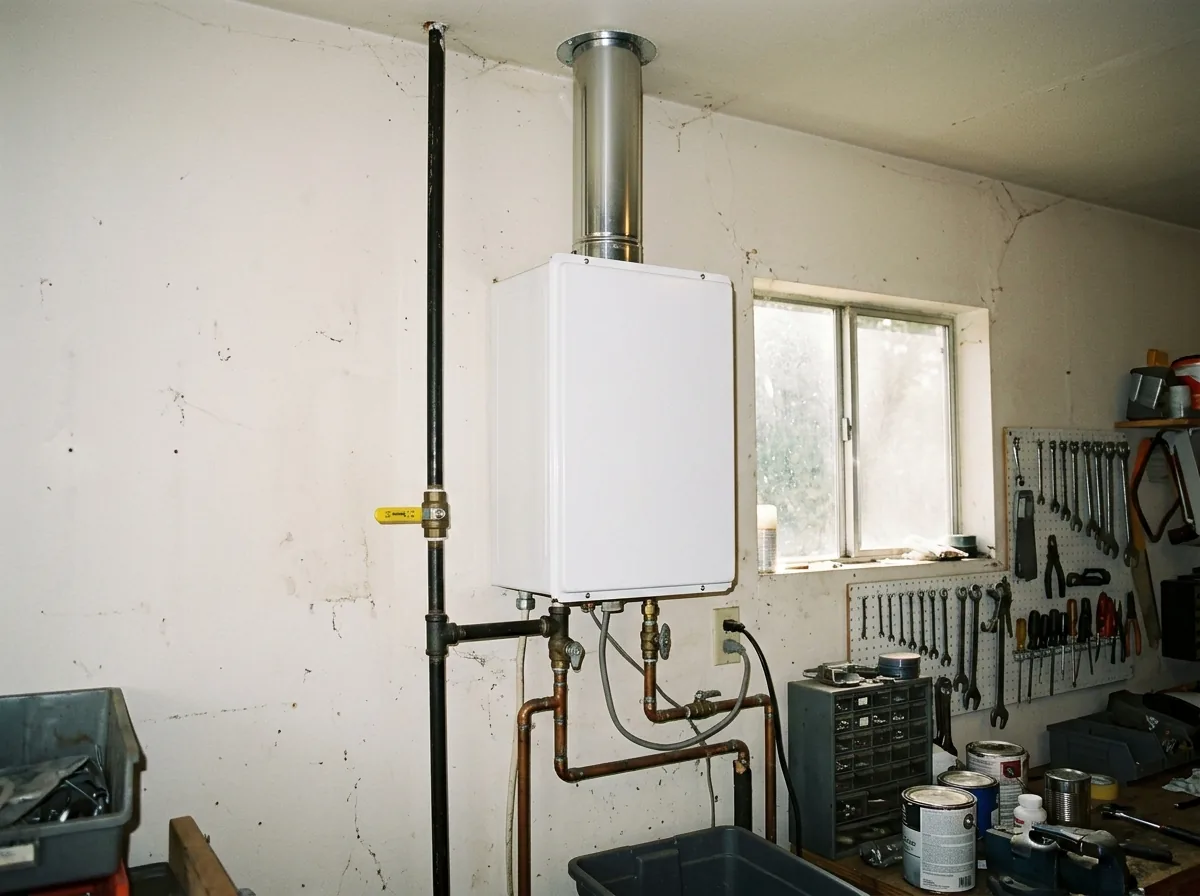
Non-Condensing Gas Tankless Heaters
A non-condensing unit has one heat exchanger and sends its exhaust out hot, through metal Category III vent pipe. It costs less to buy and install, but Navien puts its efficiency at about 0.80 UEF. That's below ENERGY STAR's 0.95 line for gas tankless heaters. Navien suggests it where a condensate drain would be hard to run, such as an attic or an interior wall.
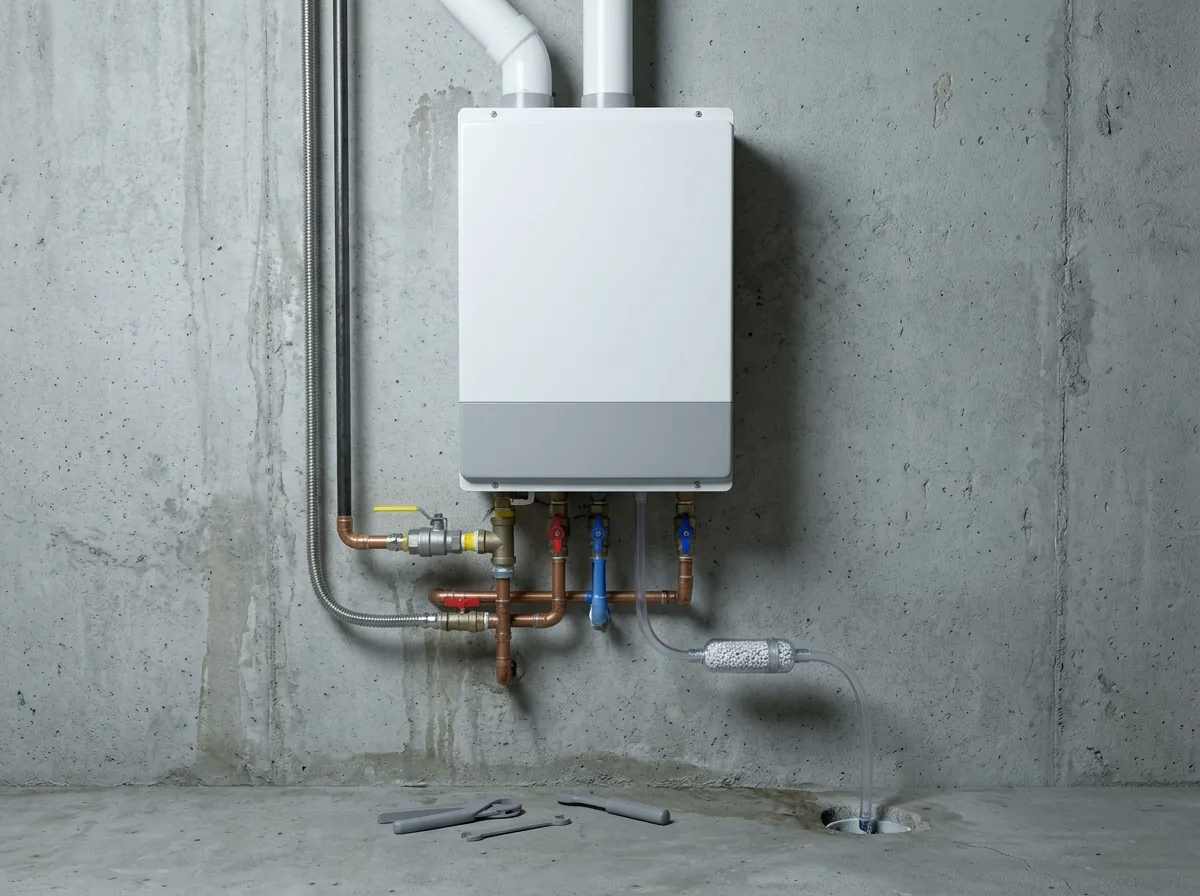
Condensing Gas Tankless Heaters
A condensing unit runs its exhaust through a second stainless heat exchanger to preheat the incoming water, which lifts Navien's condensing models to as high as 0.96 UEF. The exhaust leaves cool enough for PVC, CPVC or polypropylene vent pipe. It also leaves water behind. The condensate is acidic, so a neutralizer kit and a drain line to a floor drain or pump come with the job. On outdoor units, Rinnai's manual says to run that line through an interior wall, or between the insulation and an interior wall, so it doesn't freeze.
Propane Tankless for Homes Off the Gas Main
Houses without a PSE gas line can still run a gas tankless heater on propane. HomeGuide's comparison lists the trade-offs: a propane tank can go almost anywhere, but the fuel can cost more than natural gas and refills have to be scheduled. On the install side, two things differ:
- Gas setting: the heater has to be set for LP. Rinnai's SENSEI units are switched to propane at the controller during setup.
- Pressure: Rinnai wants inlet pressure to hold at 8.0 inches of water column on propane while every appliance runs, against 5.0 for natural gas.
Rinnai's manual sizes the gas supply for the heater plus every other gas appliance at full demand, and that holds for a propane system too.
Outdoor-Mount Gas Units on the Siding
An outdoor unit skips the indoor vent run, but it still has rules. Rinnai's outdoor models need the brand's own outdoor vent cap, which has clearances of its own and has to stay clear of snow and ice or the heater won't run properly. With 120-volt power on, the unit protects itself from freezing down to -4°F; if the power drops in a freeze, it has to be drained.
High-Input Gas Units for Large Homes
ENERGY STAR's gas tankless category stops at 200,000 Btu an hour, and the biggest whole-house models sit just under it. Rinnai's RX199iN is rated at 199,000 Btu/h. That load is why gas pipe size matters so much: in the sizing example in Rinnai's manual, a 199,000 Btu/h heater on a line shared with a furnace, range and dryer pushes the main run to 1-inch pipe. DOE notes that even the largest gas unit can be stretched by a shower plus a dishwasher in a big household, and suggests two or more units where that's a risk.
Why Kent homeowners and businesses call Kent Tankless Water Heater
- Your details go to a single independent plumber, not a list of bidders
- The referral is free, and booking is your call
- Ask for gas line, vent and wiring costs as separate lines
- Ask which Kent and L&I permits the job needs
- Keep the down payment small and pay as work is finished
Gas Tankless Water Heaters and the 25C Tax Credit in 2026
The federal Energy Efficient Home Improvement Credit (25C) used to help pay for gas tankless heaters. Under the IRS rules, a natural gas, propane or oil water heater earned 30% of its cost, capped at $600 per item, if it met the Consortium for Energy Efficiency's highest efficiency tier (not counting any advanced tier) in effect at the start of the install year. Labor could count toward the cost.
That credit is over. The IRS page states it applies to property placed in service through December 31, 2025, so a gas tankless heater installed in 2026 gets nothing from it. Some cost guides haven't caught up: HomeGuide's January 2026 guide still lists a 30% credit of up to $600 for ENERGY STAR gas tankless units. PSE's 2026 water heating rebates don't include gas tankless either; its only water heater rebate is for heat pump models (PSE heat pump rebate).
Gas Tankless Install Extras: Gas Line, Vent and Permit
Three parts of the job sit outside the heater itself, each on its own page:
Gas line
pipe size depends on the total Btu load and the length of the run (gas line sizing).Vent
materials and wall clearances are set by the heater's manual (tankless venting).Permit
Kent treats gas piping and gas water heaters as mechanical work (Kent permits).
Gas piping answers to the state's fuel gas code rather than its plumbing code, so the two sides of the job can need separate permits.