
Ways to Keep Scale Out of a Tankless Heat Exchanger
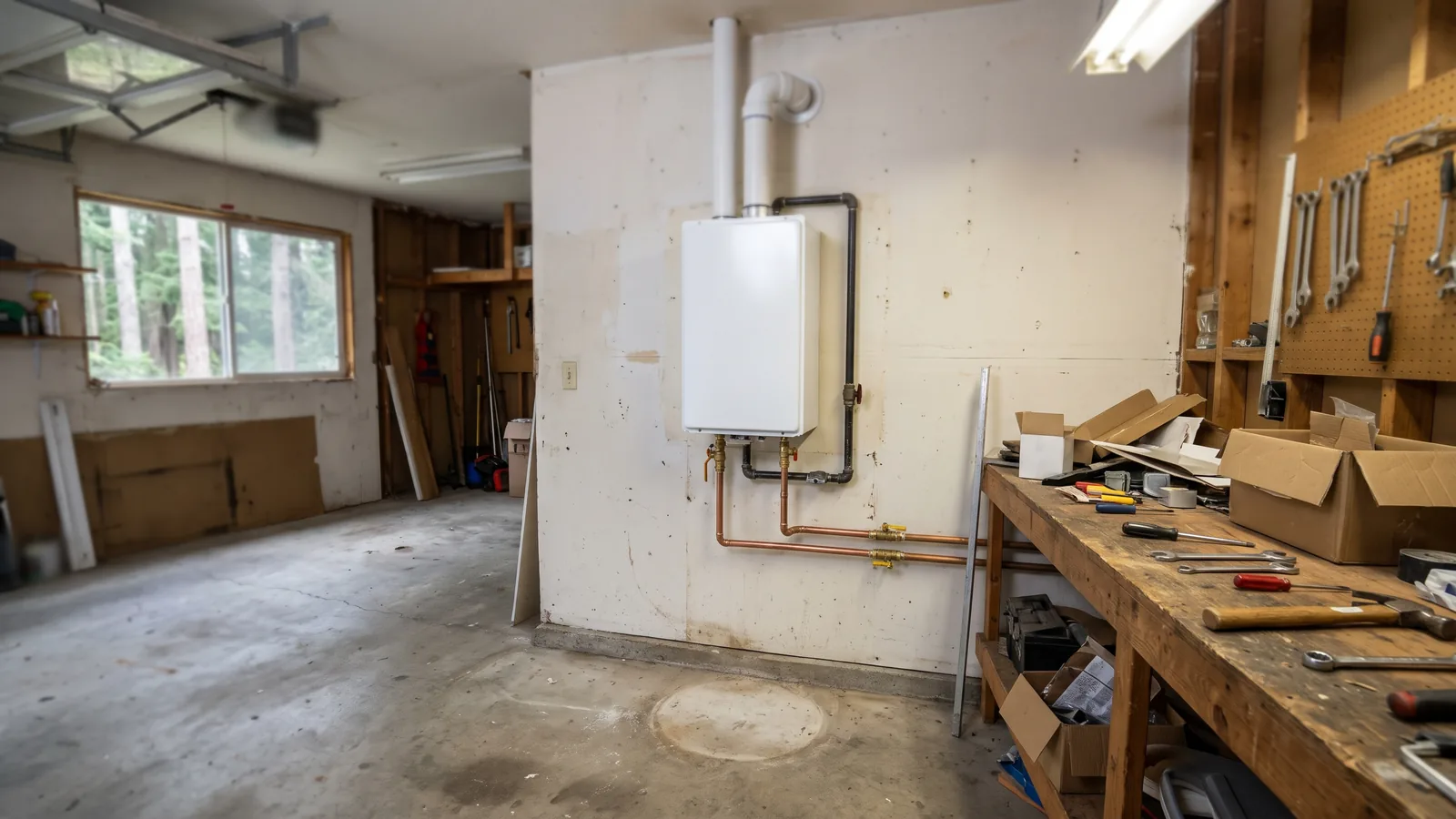
Scale forms inside the heat exchanger, and Rinnai notes that a high temperature setting speeds it up. The options below go from removing the minerals altogether to just keeping them from sticking.
Salt Softeners With Resin Tanks
An ion-exchange softener passes water through resin beads that trade sodium for the calcium and magnesium causing hardness. HomeGuide calls it the most popular type for homes:
- Single tank: $1,200 to $3,800 installed.
- Dual tank (one regenerates while the other works): $1,700 to $5,000.
- Upkeep: $50 to $150 a year in salt or potassium, plus $100 to $300 or more in maintenance.
Washington's plumbing code requires water softeners to comply with NSF 44. If the house keeps a tank heater too, A.O. Smith wants its anode rod checked every year on softened water; see tank maintenance.
Salt-Free Conditioners (TAC)
Template-assisted crystallization leaves the minerals in the water but changes their form so they don't stick as scale. HomeGuide notes these systems don't truly soften water and suit moderate hardness better than very hard water. Navien's PeakFlow line works this way, turning hard calcite scale into softer crystal forms that rinse through:
- PeakFlow S: point-of-use, up to 6 GPM.
- PeakFlow A: up to 10 GPM.
- PeakFlow C: larger homes and commercial, up to 20 GPM.
Navien adds a year of labor warranty when a new Navien tankless heater goes in with a new PeakFlow A or C.
Scale-Inhibitor Cartridges on the Cold Line
The smallest step is a cartridge on the cold line just ahead of the heater. Rinnai's Scale Control System feeds a blend of control compounds into the water, needs no electricity, and its cartridge is usually changed every 10 to 12 months. When Rinnai launched it, the company said a standard softener gives comparable results; the cartridge costs less and takes less space.
Sediment Filter Ahead of the Heater
A filter guards against grit, not hardness. Rinnai's manual says the water must be free of sand and dirt, and every unit has an inlet filter at the bottom that should be rinsed during service. Kent's water utility explains that a main break or hydrant use can stir up harmless river silt from the bottom of the mains. At times the Green River supply also carries more iron and manganese, which turns water yellow. Rinnai's limits for those two are 0.3 mg/L and 0.05 mg/L.
Whole-House Softener Installation
A whole-house unit goes on the main line, ahead of every fixture. HomeGuide sizes it by multiplying daily water use by hardness in grains, then by 3 to 7 days between regenerations. Things that add to the quote:
- Drain line for the backwash.
- Dedicated circuit, if the controller needs one: $250 to $900.
- Permit, where local rules require it.
Why Kent homeowners and businesses call Kent Tankless Water Heater
- Your details go to a single independent plumber, not a list of bidders
- The referral is free, and booking is your call
- Ask for gas line, vent and wiring costs as separate lines
- Ask which Kent and L&I permits the job needs
- Keep the down payment small and pay as work is finished
Kent Water Hardness and the Tankless Warranty
The City of Kent's 2025 water quality report gives hardness of 46.7 to 123 mg/L, with calcium at 14.1 to 24.8 and magnesium at 2.8 to 14.8 mg/L. The city draws on 16 wells, 2 springs and Green River surface water bought from Tacoma, so the reading varies with the source. On the USGS scale, up to 60 mg/L is soft, 61 to 120 moderately hard and 121 to 180 hard. Kent's top reading just reaches the hard band. Kent's GIS portal shows whether an address gets city water or another purveyor's; neighbors on a different district should check that district's report.
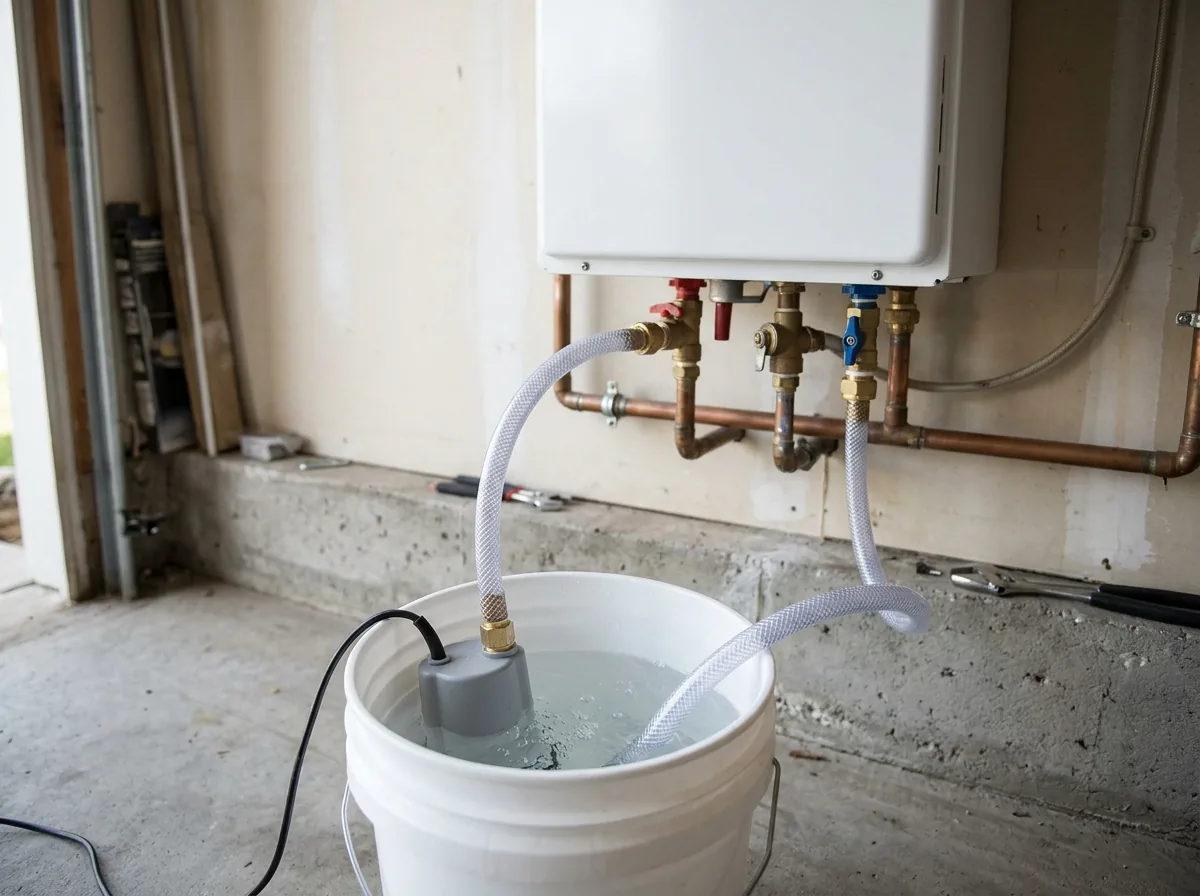
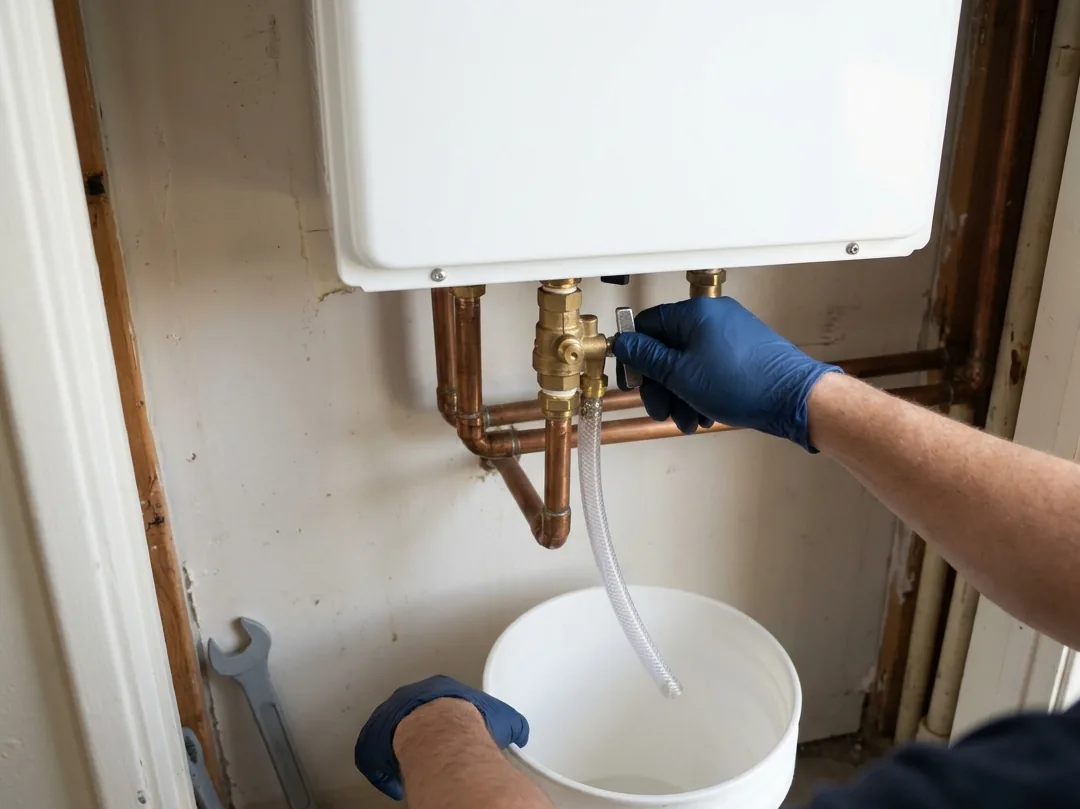
The warranty is the reason to care. Rinnai's manual says hard water must be treated, sets a hardness limit of 200 mg/L, and excludes heat-exchanger scale damage from the warranty. For water from 61 to 120 mg/L it recommends a softener or scale treatment and a yearly flush; at 0 to 60 it lists neither. The flushing method is on the tankless maintenance page, and the scale code these units display is explained under tankless repair.
For a Kent home at the low end of the city's range, the yearly flush may be enough. Toward 123 mg/L, a cartridge or TAC unit costs less than one heat exchanger, which HomeGuide puts at $600 to $1,300 to replace.