
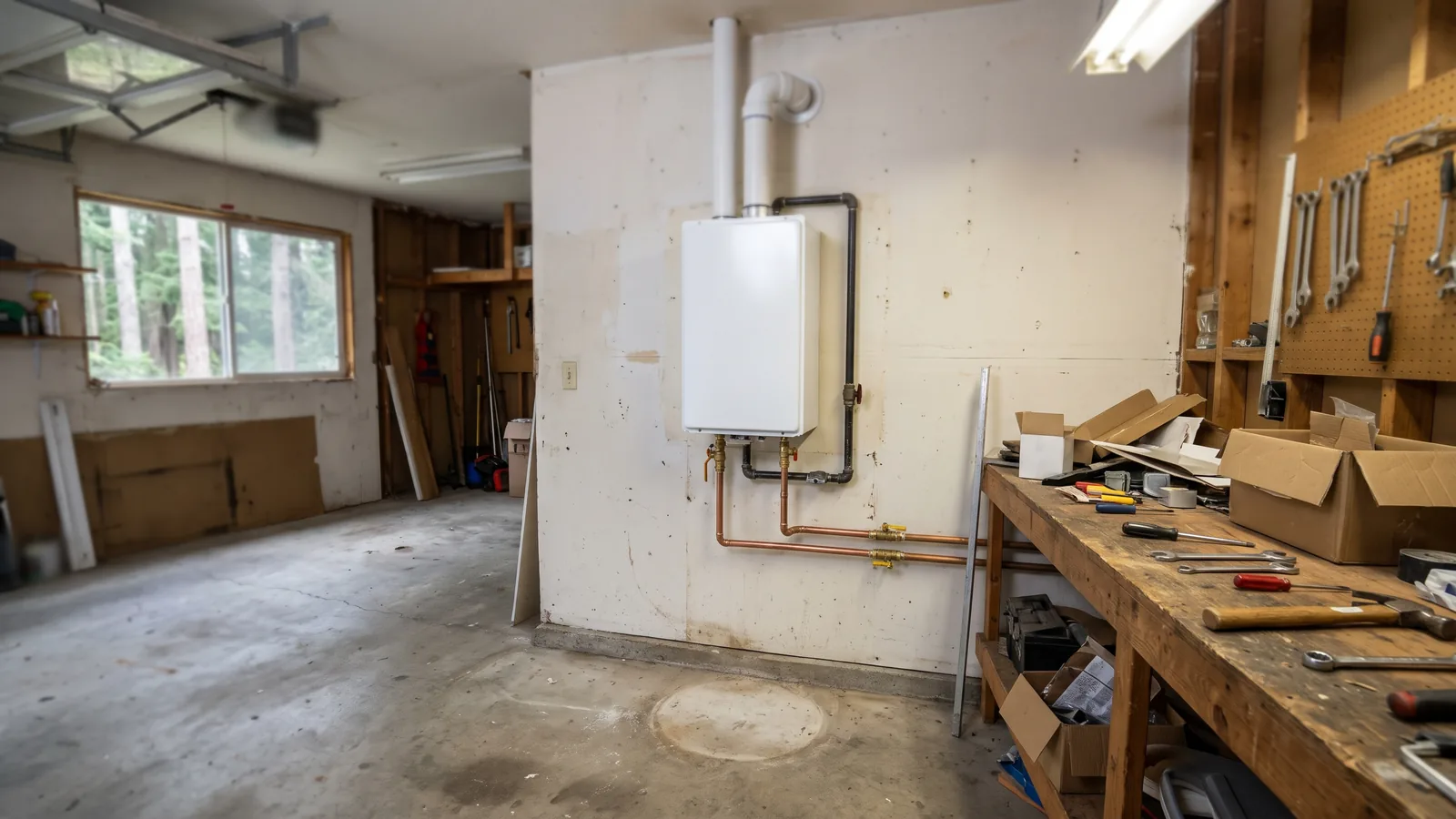
Tankless Water Heater Venting Options in Kent
The vent is set by the heater, not the house: the exhaust temperature decides the pipe, and the manual decides the length, slope and termination. Washington's plumbing code leaves fuel-fired appliance venting out of its adoption and sends it to the Mechanical Code, and it makes the manufacturer's instructions binding.
Two-Pipe PVC Venting for Condensing Units
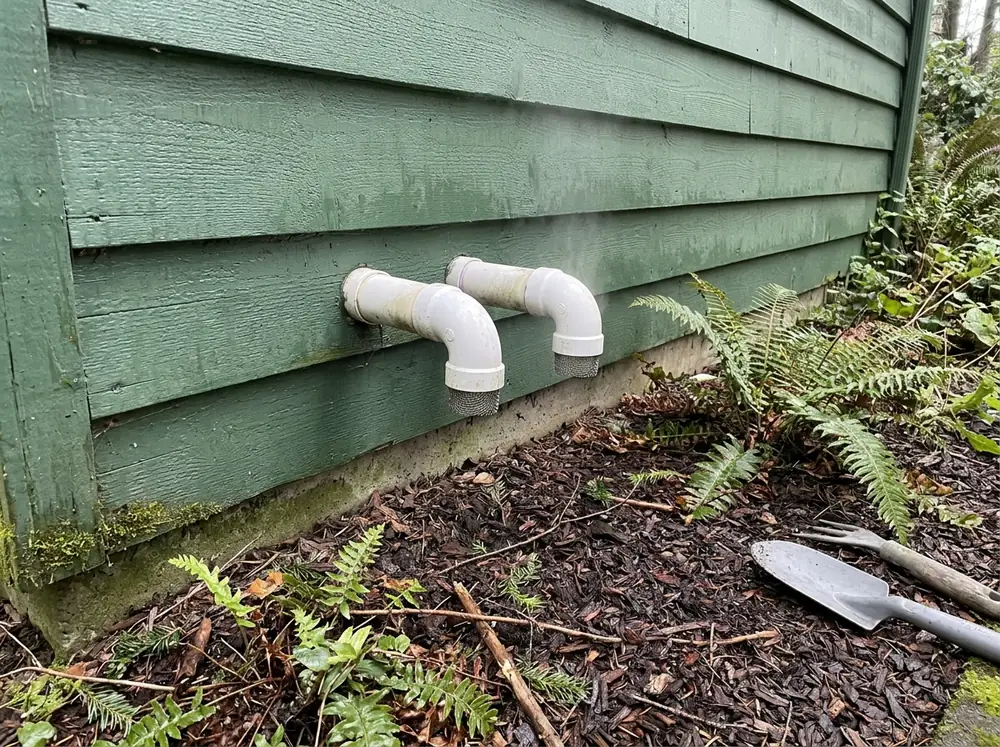
A condensing heater's exhaust is cool enough for plastic, so it usually runs as two pipes: one bringing in combustion air, one carrying exhaust out. Rinnai's rules for its condensing SENSEI units:
- Pipe: solid-core Schedule 40 PVC or CPVC; cellular-core pipe is not allowed.
- Size and length: 2-inch pipe up to 75 equivalent feet, 3-inch up to 150; each 90° elbow counts as 6 feet on 2-inch pipe.
- Slope: 1/4 inch per foot back toward the heater, so condensate drains inside.
- Supports: every 4 feet on horizontal runs and every 6 feet on vertical ones.
Navien adds polypropylene as a third option for condensing units.
Metal Category III Pipe for Hot Non-Condensing Exhaust
A non-condensing unit sends its exhaust out hot, so plastic is off the table. Navien vents these through metal Category III venting, which it calls the industry standard for non-condensing installs. The old tank's flue isn't a shortcut: HomeGuide says tank vents can't be reused on a tankless heater, and Rinnai's manual forbids tying into an existing vent or chimney.
Concentric Kits Through a Single Wall Hole
A concentric vent runs the exhaust pipe inside the intake pipe, so one hole in the wall or roof does the job of two. Rinnai lists 2-inch-in-4-inch and 3-inch-in-5-inch kits, with the same 75 and 150-foot limits as two separate pipes. For a garage or basement heater near an outside wall, that means one hole in the siding instead of two.
Wall Exits Versus Roof Exits
Rinnai's manual lets the installer pick a horizontal (sidewall) or vertical (roof) termination. A sidewall exit is short and easy to reach, but it brings the clearance rules into play: windows, doors, decks, gas meters and walkways all set limits. A roof exit keeps the exhaust away from windows and walkways but needs flashing where it passes through. Whichever it is, avoid ending near a dryer vent or any air inlet.
Neutralizing Acidic Condensate
Condensing units make water from their exhaust, and it's acidic. Rinnai sells a neutralizer kit that passes the condensate through media to raise its pH, which helps protect the drain and the public sewer. Its line rules:
- Material: corrosion-resistant pipe or hose, at least 1/2 inch.
- Route: sloped down to a floor drain, or to a condensate pump where there's no drain below.
- Separate: never combined with the relief valve line or an air conditioner drain.
- Freezing: heat-traced or run inside an interior wall where it could freeze.
Outdoor Units Without an Indoor Vent Run
An outdoor-mounted heater has no vent pipe inside the house, but it isn't vent-free. Rinnai's outdoor models must use its own outdoor vent cap, and the cap has its own clearances: 36 inches from a soffit vent, deck or porch, and 60 inches vertically between two units. Keep it clear of snow and ice. More on outdoor gas units is on the gas tankless page.
Why Kent homeowners and businesses call Kent Tankless Water Heater
- Your details go to a single independent plumber, not a list of bidders
- The referral is free, and booking is your call
- Ask for gas line, vent and wiring costs as separate lines
- Ask which Kent and L&I permits the job needs
- Keep the down payment small and pay as work is finished
Tankless Vent Clearances on a Kent House
Rinnai's U.S. clearances for a direct-vent indoor unit, from its SENSEI manual (other brands publish their own):
| Distance from the vent end to | Minimum |
|---|---|
| Ground, porch, deck or balcony | 12 inches |
| Window or door that opens | 12 inches |
| Inside corner | 12 inches |
| Air inlet without a fan (or another appliance's air intake) | 12 inches |
| Mechanical air supply inlet within 10 feet | 3 feet above it |
| Expected snow level | 12 inches above it |
Rinnai also rules out three spots: over a public walkway, under a soffit vent, and anywhere condensate or vapor could damage a regulator or a relief valve. It also warns that exhaust moisture collecting under the eaves can discolor the siding. Where local code is stricter, the stricter number wins.
These are one brand's numbers; every heater's manual has its own table, and Washington makes that manual binding. Have the plumber mark the exit point and check it against the new heater's table, and against any stricter local rule, before drilling.