
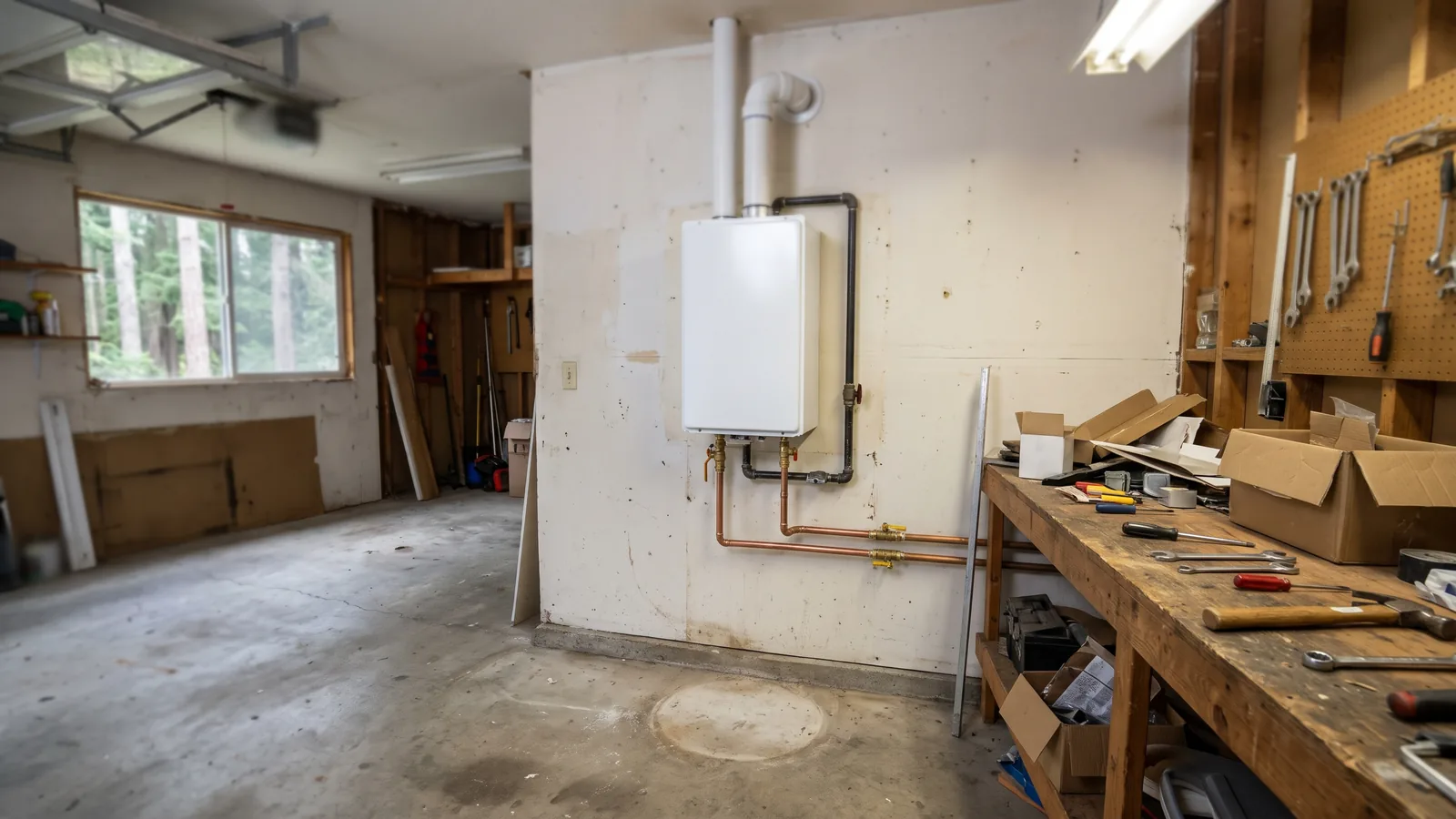
Water Heater Leaks in Kent, Traced to Their Source
Where the water comes from matters more than how much there is. A drip from a valve is usually a part; water from the tank body means the heater is done.
Water From the T&P Relief Valve
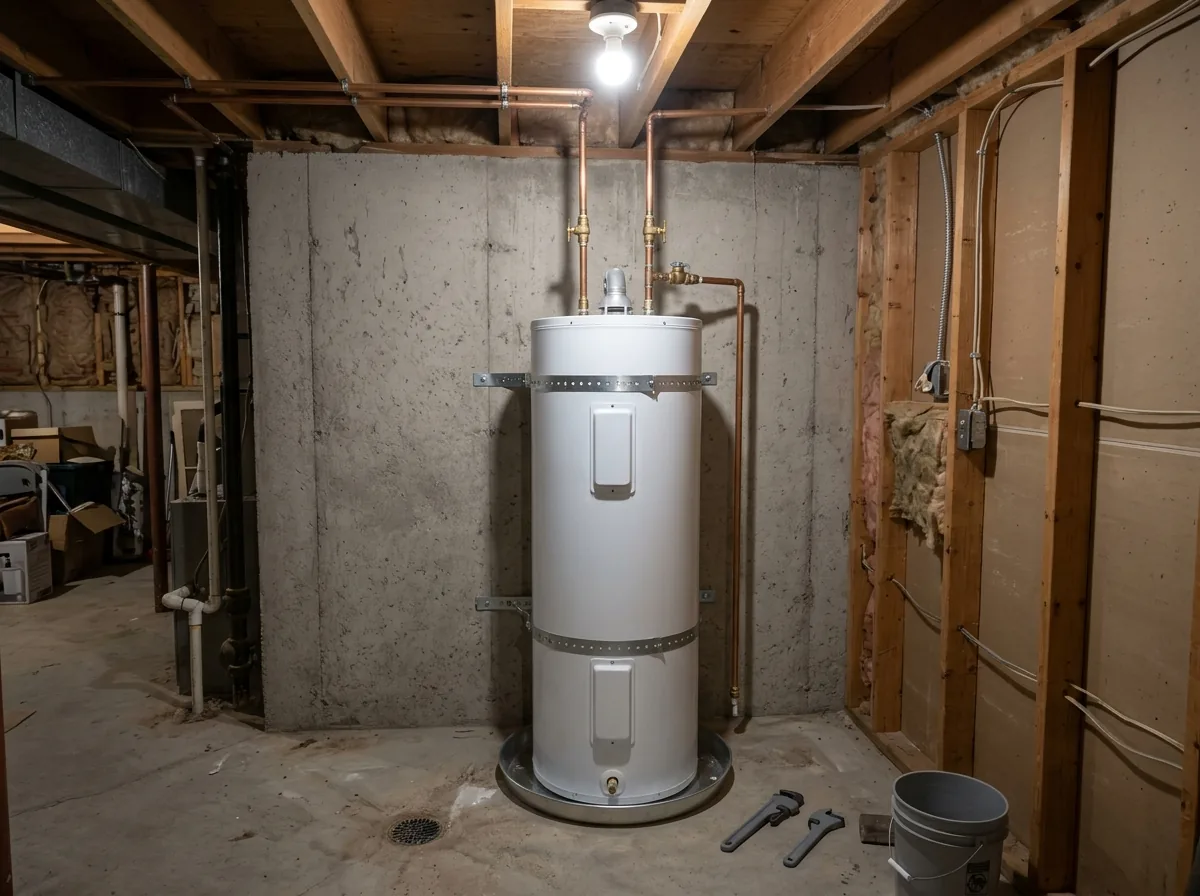
The valve on the side or top of a tank opens when pressure or temperature gets too high. HomeGuide links a slow seep to three causes: sediment in the valve, too much pressure in the tank, or a worn-out valve. A.O. Smith's manual names excess pressure as the most common one, usually from thermal expansion in a closed system, which an expansion tank handles. In mineral-heavy water, IAPMO's commentary adds, scale can lock the valve seat. A new valve costs $50 to $300.
Weeping Drain Valve
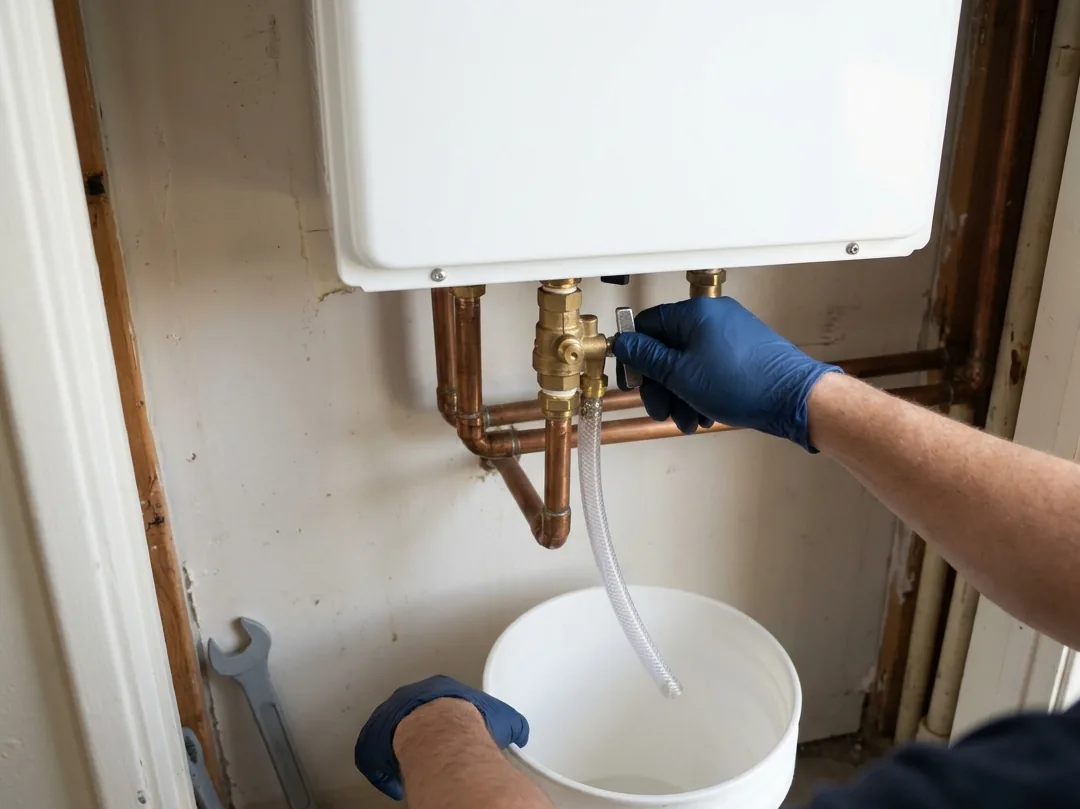
The drain valve near the bottom is where the tank gets emptied. HomeGuide says a leak at a fitting, bolt or drain valve is sometimes fixed by tightening it. If not, the valve gets replaced, which means draining the tank first. HomeGuide also notes that sediment left in a tank can block this valve, one reason to keep up the sediment flush.
Wet Fittings and Nipples on Top
Water on top of the tank often comes from the cold inlet, the hot outlet or the short nipples between them and the supply lines. Check whether it's running down from a pipe higher up before blaming the heater. If a section of supply pipe has to be redone, HomeGuide's material figures are $1 to $3 a foot for copper and $0.30 to $0.82 for PEX.
A Rusted-Through Tank Bottom
Water from under the jacket, with no valve or fitting wet above it, usually means the steel tank has failed. HomeGuide says a bottom leak points to damage in the tank itself and the whole heater has to be replaced. A.O. Smith explains the usual cause: once the anode rod is used up, the tank starts to corrode and eventually leaks. No patch fixes it; plan a water heater replacement.
Drain Pans and Automatic Leak Shutoffs
A pan catches slow leaks; a shutoff limits a sudden one. A.O. Smith's manual calls for a metal drain pan under its gas heaters in all cases:
- Pan size: at least 1 inch wider than the heater's jacket at every point.
- Depth: 1.75 inches at most.
- Drain: piped to an adequate drain.
The same manual lists leak devices that can be added: sensors in the pan that sound an alarm or shut off water to the heater, sensors that shut off the whole building, and valves that react to a pressure difference between the hot and cold pipes.
When the Leak Is on a Tankless Heater
A wall-hung tankless heater has no tank to rust through, so water usually comes from a fitting or a valve. Those faults, and the error codes that often appear with them, are covered on the tankless repair page. HomeGuide's tankless repair range is $300 to $1,300.
Why Kent homeowners and businesses call Kent Tankless Water Heater
- Your details go to a single independent plumber, not a list of bidders
- The referral is free, and booking is your call
- Ask for gas line, vent and wiring costs as separate lines
- Ask which Kent and L&I permits the job needs
- Keep the down payment small and pay as work is finished
The First Ten Minutes After You Find Water
Close the supply
Shut the cold-water valve at the heater. Kent's city code requires a shut-off valve at every building, and the city's water page lists the most likely spots, including next to the water heater.Leave the meter alone
Kent says not to use the valve at the water meter: it's city property, and owners pay for any damage. The city's utility customer service can schedule a shut-off, sometimes for a fee.Turn off the heat
Gas valve to off, or the breaker for an electric tank.Keep clear of the relief valve outlet
A.O. Smith warns its discharge can be scalding.If the heater stood in water,
A.O. Smith says to have it replaced rather than repaired.
Relief Valve and Discharge Pipe Rules in Washington
The relief valve is the last of three safeguards on a storage heater, IAPMO's code manual explains: the thermostat, then a high-limit switch, then the combined temperature and pressure valve. The plumbing code requires one on every storage heater, exempting only listed instantaneous heaters 3 inches or less inside. Its sensing tip must sit in the top 6 inches of the tank, where the water is hottest. A.O. Smith asks owners to lift the lever at least once a year; IAPMO notes every three months may be needed in hard water. If it keeps running after the test, close the cold inlet and drain the tank.
Washington amends section 608.5 of the Uniform Plumbing Code, which governs the discharge pipe:
Size and material
no smaller than the valve outlet, rated for the system's temperature, straight rigid lengths only, no coils or flex lines.Route
no valves or obstructions; drains by gravity through an air gap to the drainage system or outdoors; not trapped, not exposed to freezing.End
6 inches to 2 feet above the ground or floor, pointing down, unthreaded and easy to see.Not into the pan
discharge into a water heater pan is prohibited.Replacement exception
where no drain existed, a replacement heater's pipe may simply point down and end 6 inches to 2 feet above the floor.