
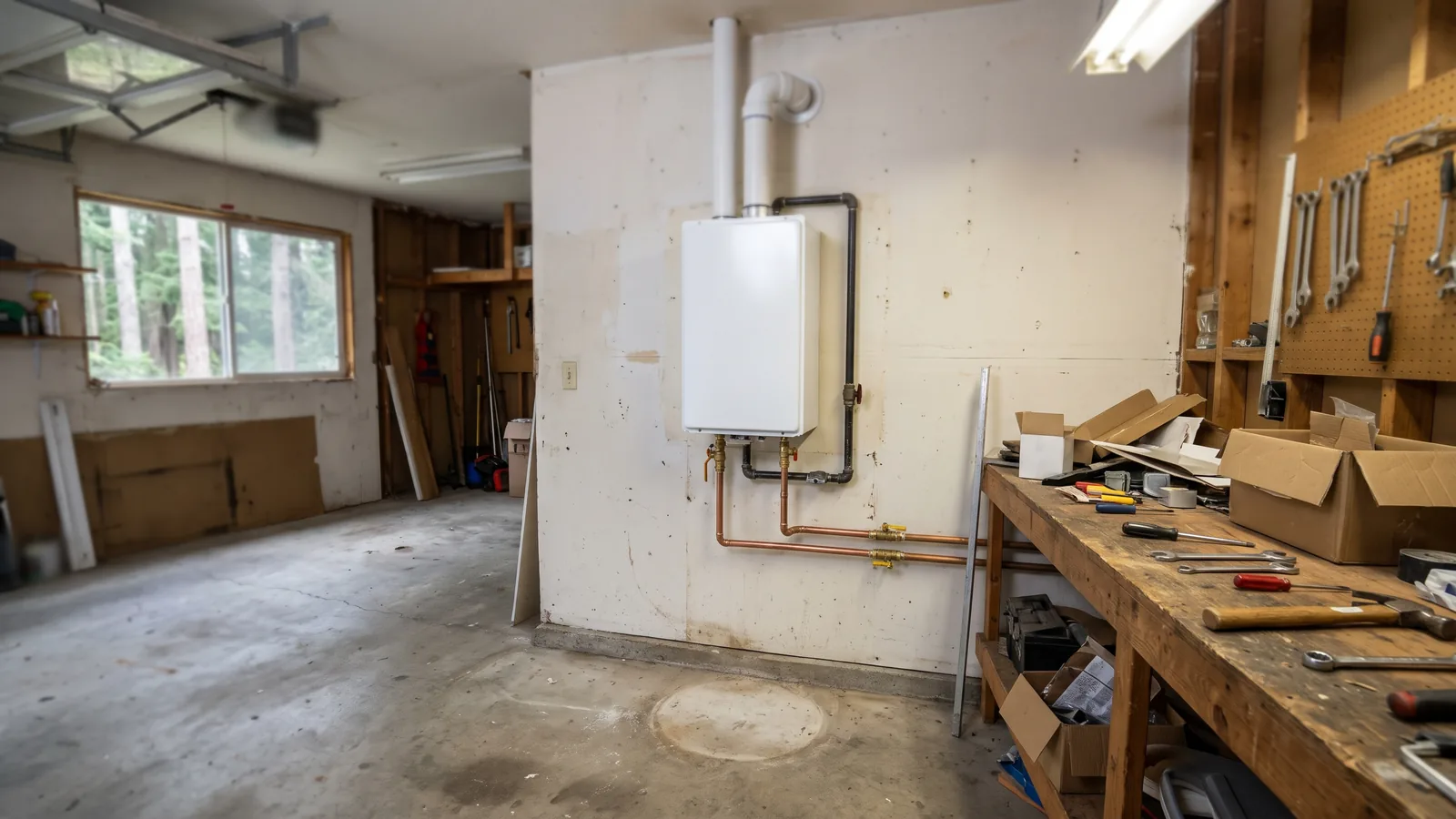
Heat Pump Water Heater Installation Types for Kent Homes
A heat pump water heater is still a tank. It heats the water by pulling warmth from the air around it, which DOE says makes it two to three times as efficient as a standard electric tank. The type you can install depends on the power at the spot and the room around it.
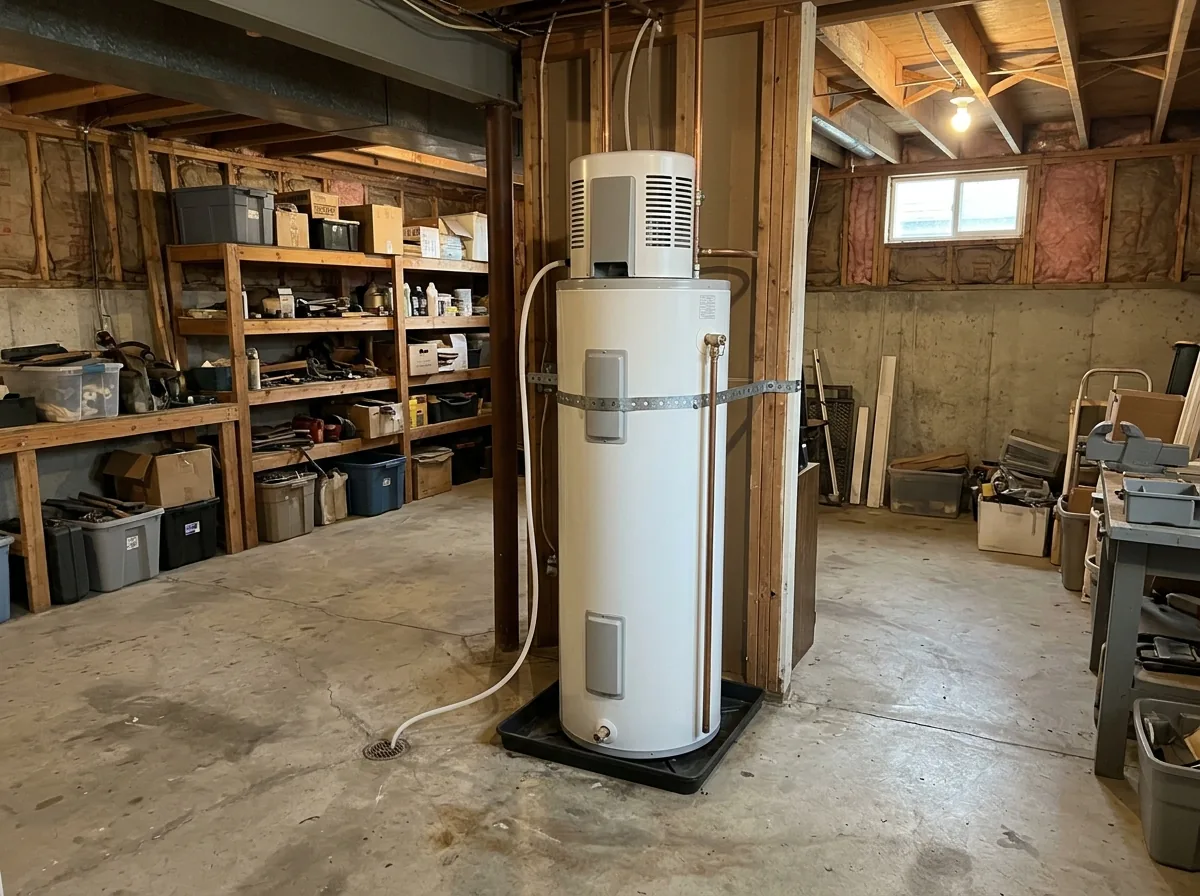
All-in-One Units on a 240-Volt Circuit
The common model has the compressor and fan built onto the tank, with electric elements as backup. ENERGY STAR's installer guidance:
- Circuit: a 208/240-volt circuit with 30-amp service for the heater, much like an electric tank.
- Lower-draw option: 240-volt models on 15-amp breakers exist, but their smaller element gives a lower first-hour rating.
Replacing an electric tank is the easy case, since the circuit is usually there. Rewiring America's numbers put that swap at $3,600 to $4,800.
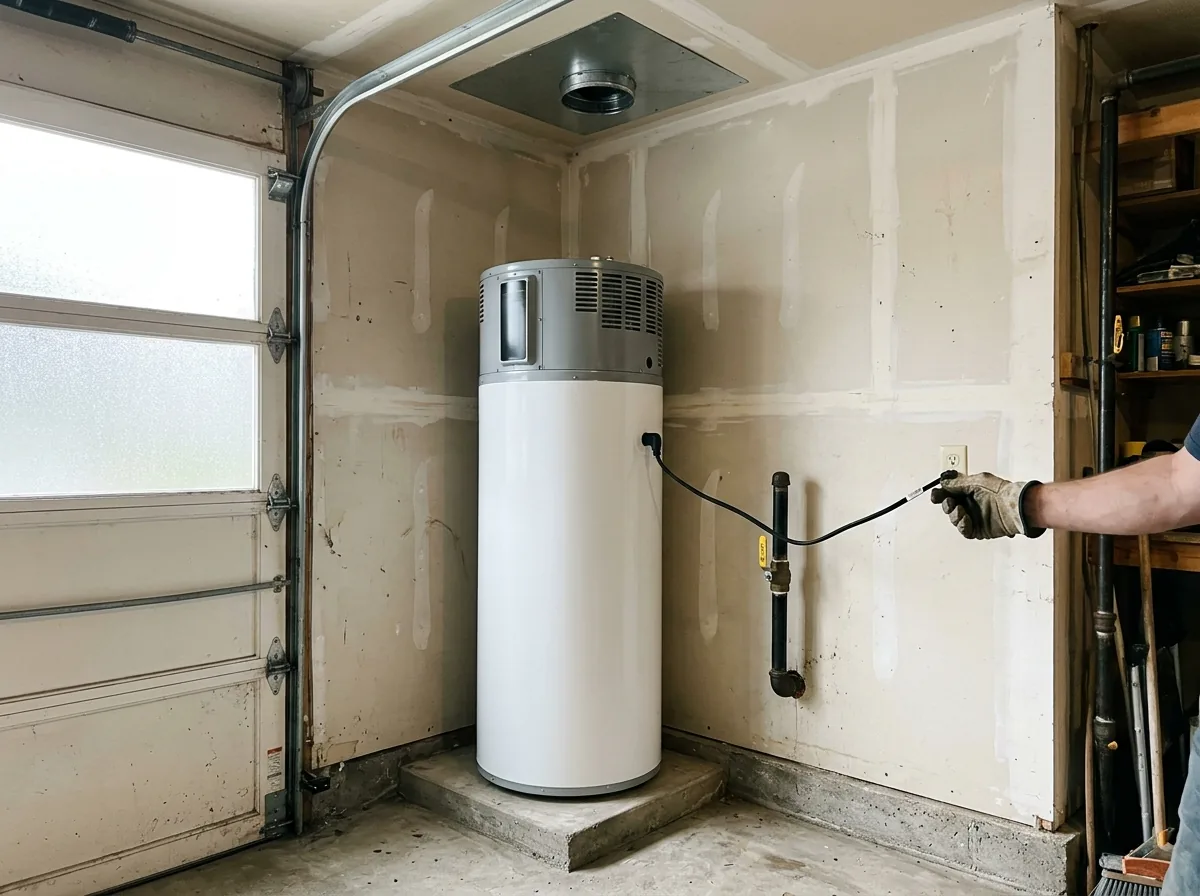
120-Volt Plug-In Models for Gas Tank Swaps
Replacing a gas tank usually means running a new 240-volt circuit, which is why Rewiring America finds gas swaps cost more: $4,300 to $6,500. Plug-in models avoid that. Rheem's ProTerra Plug-in runs on 120 volts, comes in dedicated-circuit and shared-circuit versions, and is built to drop into a gas tank's footprint with little or no electrical work.
The trade-off, per the Hot Water Solutions installer guide, is a smaller backup element or none at all. These units need plenty of make-up air and should stay out of spaces that drop below 50°F.
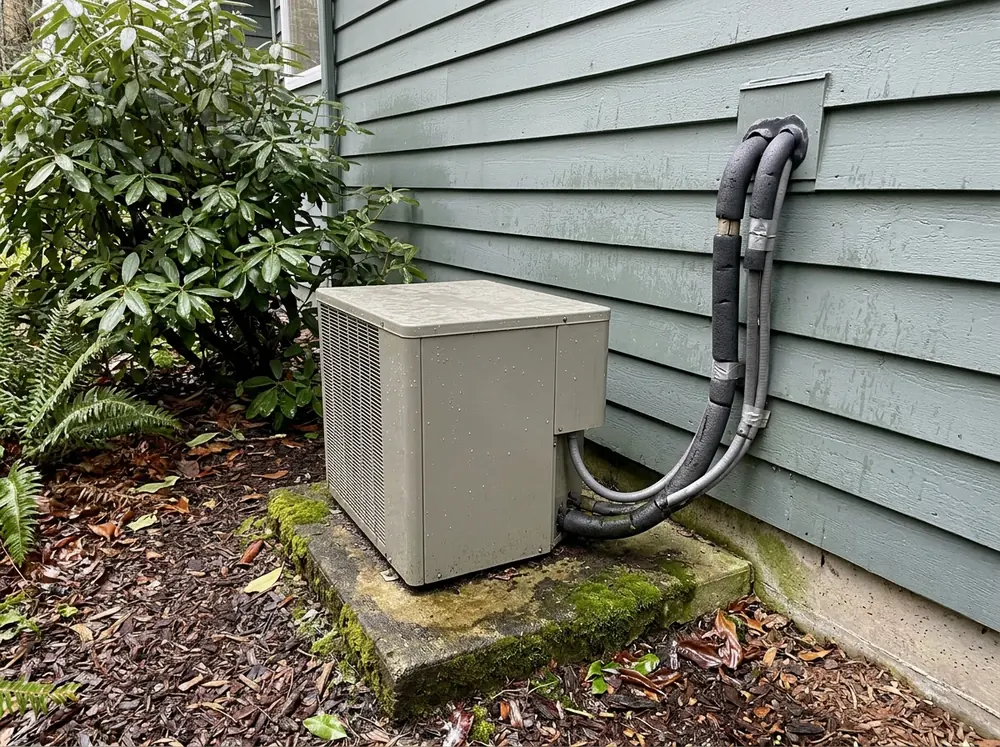
Split Systems With an Outdoor Compressor
A split system puts the heat pump outside and the tank inside. Hot Water Solutions says these work in any climate, with many models running efficiently down to -25°F. In one maker's design, the SanCO2, two water pipes are the only connection between the outdoor unit and the tank.
Garage, Basement and Utility-Room Placement
Hot Water Solutions ranks basements as the best spot and garages next. ENERGY STAR adds interior utility and laundry rooms, where waste heat from other equipment helps (DOE names a furnace room), and warns that cold garages may freeze in cooler climates. Below roughly 40°F of intake air, the backup elements take over and efficiency falls. The cooled exhaust is a plus in a laundry room and a nuisance next to a bedroom.
Ducting Air In and Out of a Small Room
A room smaller than about 450 cubic feet has to trade air with another space, per Hot Water Solutions. ENERGY STAR's options:
- Passive: at least 240 square inches of open area, with high and low openings: a louvered door, two transfer grilles, or a high grille plus a 3/4-inch door undercut.
- Ducted: intake, exhaust or both ducted, with a louver of at least 130 square inches where only one side is ducted.
- Don'ts: never duct only one side outdoors, never run a duct between the heater and a garage, and in cold climates don't duct both sides outside.
Routing the Condensate to a Drain
Heat pump tanks drip condensate, several gallons a day by PSE's estimate. Unlike a condensing gas heater's, it needs no neutralizer. ENERGY STAR's rules: gravity drainage with no part of the line above the outlet, ending at a floor drain, laundry or utility sink, standpipe or mop sink, never straight into the drain piping or into the heater's pan. A condensate pump works where gravity can't.
Why Kent homeowners and businesses call Kent Tankless Water Heater
- Your details go to a single independent plumber, not a list of bidders
- The referral is free, and booking is your call
- Ask for gas line, vent and wiring costs as separate lines
- Ask which Kent and L&I permits the job needs
- Keep the down payment small and pay as work is finished
Heat Pump Water Heater Cost and PSE Rebates in Kent
Puget Sound Energy supplies electricity in Kent, and in 2026 heat pump water heaters are the only water heaters on its rebate list. National installed prices first:
| Item | National range | Source |
|---|---|---|
| Hybrid heat pump unit only | $1,500 to $3,000 | HomeGuide |
| Installed | $2,000 to $4,600 | HomeGuide |
| Replacing an electric tank | $3,600 to $4,800 | Rewiring America |
| Replacing a gas tank | $4,300 to $6,500 | Rewiring America |
Running costs are where it pays back. HomeGuide puts a hybrid heat pump tank at $160 to $190 a year to run, against $530 to $600 for a standard electric tank.
PSE's rebate rules for 2026:
Amount
$1,000 on a Tier 3 or Tier 4 unit from PSE's qualified product list, or $1,100 through the income-qualified Efficiency Boost program.How
an instant discount at a participating retailer, or a rebate form after purchase.Who
PSE electric customers in existing single-family homes, one rebate per home; the unit has to run on PSE electricity.Paperwork
the paid installation invoice and purchase receipt showing install date, address, brand, model and amount, sent within 30 days of installation through an online PSE account.Limits
installed on or after January 1, 2026; the rebate can't exceed the post-tax price; a warranty replacement doesn't qualify for a second one.
The federal tax credit that once covered these heaters is covered on gas tankless water heater installation. Kent permits an electric water heater swap as a plumbing minor work permit; the full permit rules are on water heater replacement, and any new circuit is an L&I electrical permit.
Space Rules for a Heat Pump Water Heater
Numbers to check before choosing a model, from DOE, ENERGY STAR, Rheem and PSE:
Air volume
1,000 cubic feet is DOE's and PSE's figure; ENERGY STAR notes manufacturers typically require 450 or 700. An 8 by 12 foot room with an 8-foot ceiling gives about 770.Temperature
a space that stays 40°F to 90°F year-round.Clearance
Rheem asks for 24 inches on all sides in a large room, 18 inches in a smaller vented one.Height
enough above the tank to service the fan and filter, whose filter ENERGY STAR says may need changing every year.Cooling effect
2,500 to 5,000 Btu an hour pulled from the room while the heat pump runs.
PSE adds that these tanks typically last 13 to 15 years, longer than the 8 to 10 it gives standard tanks.