
Tankless Water Heater Repair: What Stops the Hot Water
A tankless unit reports most of its faults as a code. The sections start with the faults that leave you with no hot water at all.
Ignition and Flame-Failure Lockouts
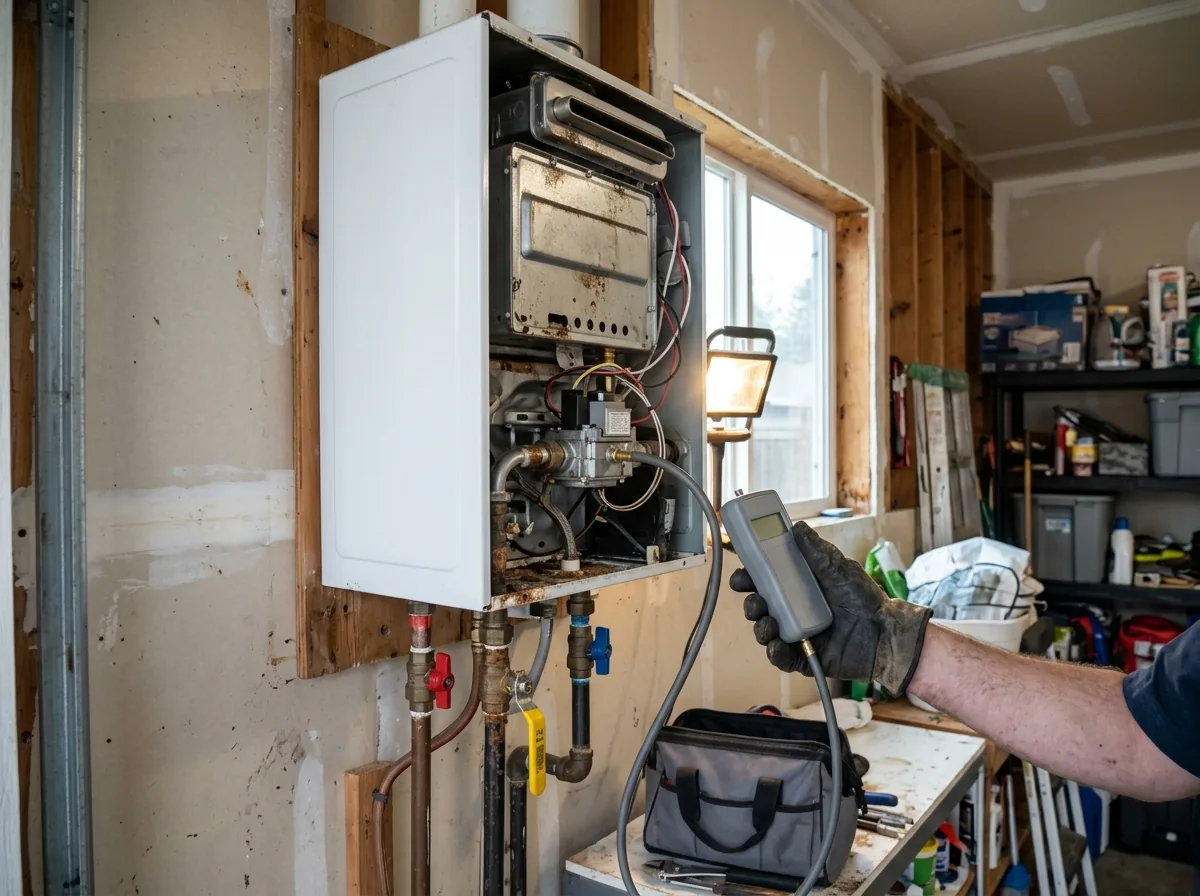
Noritz puts it simply: a burner needs air, spark and gas, and code 11 means one of them is missing. Typical causes in its list are an empty propane tank, a disrupted gas supply, poor airflow and debris on the igniter. Code 12 is the flame lighting and then going out. Noritz ties that to an undersized gas supply, which shows up when several gas heating appliances run at once, as in winter. Rinnai's troubleshooting starts in the same places:
- Every gas valve open, and propane in the tank.
- Inlet gas pressure checked with all gas appliances on high fire.
- Flame rod and spark electrode tight in their bracket; loose ones cause 11 and 12.
A gas line too small for the heater keeps causing these codes after the parts are replaced. Sizing is covered on tankless water heater gas line.
No Hot Water or Lukewarm Bursts
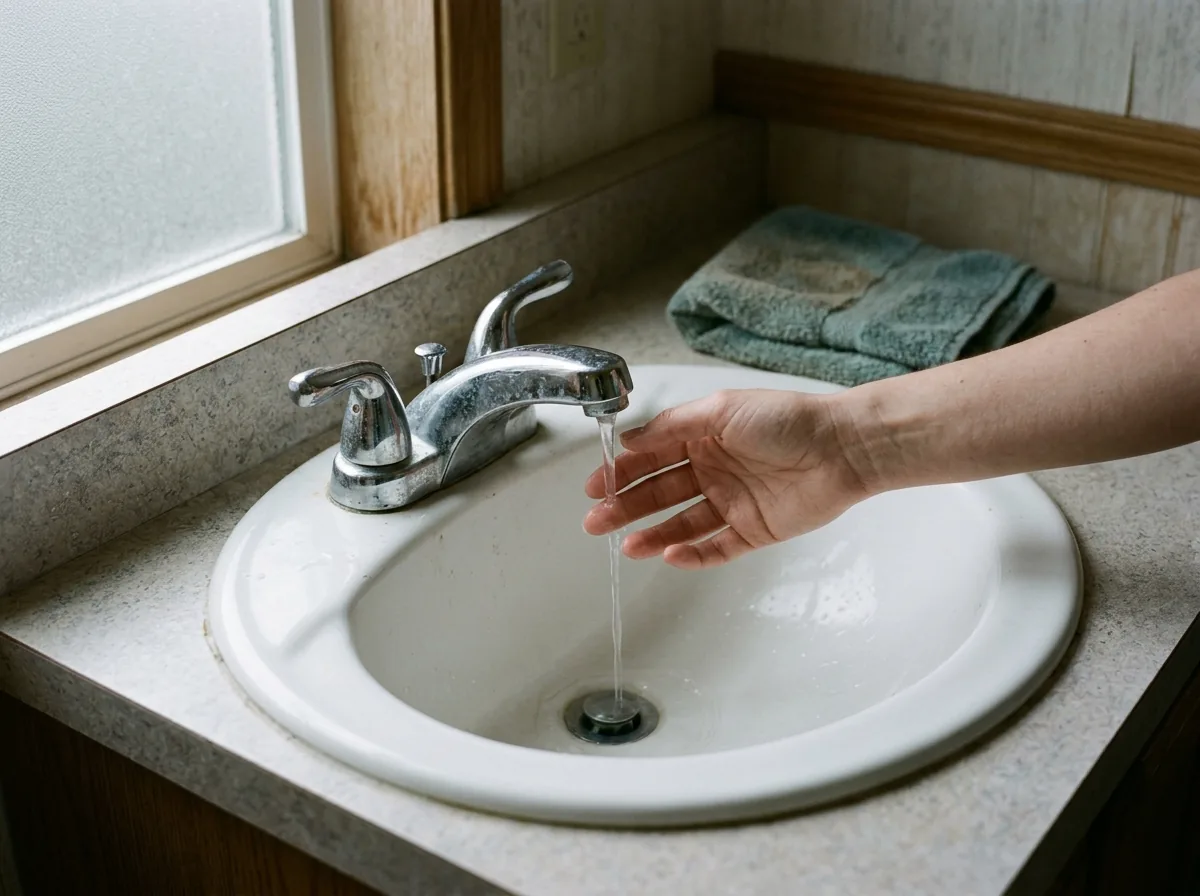
Sometimes there's no code at all. A tankless heater only fires when it senses enough flow: Noritz sets that minimum at 0.5 gallons per minute, and Rheem's code P1 means not enough flow to run. A faucet barely cracked open may not start the unit. HomeGuide lists sudden cold or lukewarm bursts and a drop in hot water pressure among the signs a unit needs repair. A slug of cold between two uses of hot water has a different cause, explained on hot water recirculation pump installation.
Reading Error Codes on Rinnai, Noritz and Rheem Units
The numbers overlap between brands but don't match exactly. Here is what each maker's own troubleshooting material says:
| Code | Rinnai | Noritz | Rheem |
|---|---|---|---|
| 10 | Troubleshooting starts at the condensate line and the inlet air filter | Not covered | Incorrect inlet air volume (warning) |
| 11 | Starts at gas valves, propane level and inlet pressure | No ignition: air, spark or gas missing | Flame not detected by flame rod |
| 12 | Starts at gas supply, propane level, flame rod and electrode | Flame lost after lighting | Flame detected, then lost |
| 14 | Overheat sensor on the heat exchanger has tripped | Not covered | Over-heat limiter active |
| LC / 1L | LC: scale building up in the heat exchanger | Not covered | 1L: lime build-up detected |
| 90 | Not covered | Three failed attempts: low gas pressure or a dirty air path | Vent blockage detected before ignition |
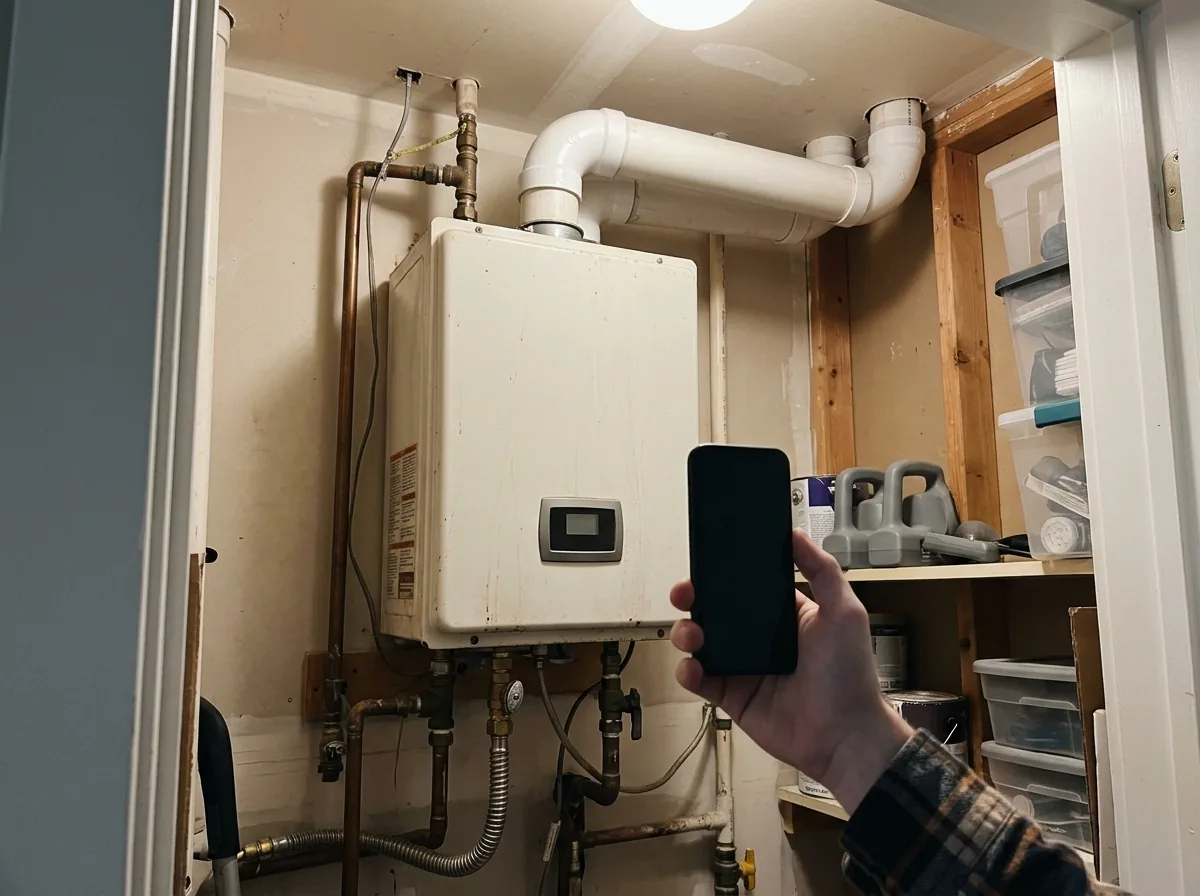
A photo of the display, plus the model number from the rating plate, saves the plumber a diagnostic step.
Overheat Trips and LC Scale Warnings
Rinnai says code 14 should be taken seriously. The overheat switch resets once the heat exchanger cools, then trips again if the cause isn't fixed, and debris built up inside the exchanger can mean replacing it. The LC codes are the only Rinnai codes that let the heater keep running while the display alternates with the set temperature and the controller beeps. Scale comes from hard water and builds faster at high set temperatures, per Rinnai. The cure is a descale, covered on tankless water heater maintenance; Kent's hardness numbers are on tankless water heater water softener.
Vent, Fan and Air-Intake Faults
On a condensing unit, Rinnai's code 10 steps begin with the condensate line: if it clogs or freezes, condensate backs into the trap and the heater shuts itself off. The next step is cleaning the inlet air filter. Rheem adds codes for blower speed (61) and vent blockage before ignition (90) or after shutdown (99). Rinnai also warns that a vent terminal that misses its required clearances can pull exhaust back in and cause incomplete combustion. Clearances are on tankless water heater venting.
Leaks Inside the Cabinet
Some units watch for this themselves: Rheem's code 17 means its leak sensor detected water. HomeGuide's prices for the usual culprits:
- Leaking pipe section: $200 to $500
- Pressure relief valve: $80 to $150
- Heat exchanger: $600 to $1,300
A leaking tank heater is a different job; see water heater leak repair.
Freeze Damage on Exterior-Wall Units
With 120-volt power on, Rinnai says its heaters protect themselves down to -22°F indoors and -4°F outdoors, out of direct wind. Wind reduces that. The protection stops at the cabinet, so exterior pipes and valves need insulation. During a power or gas outage below freezing, the manual says to drain the unit by hand, or fit the optional drain-down kit that empties it automatically when power drops. Freeze damage isn't covered by Rinnai's warranty.
Why Kent homeowners and businesses call Kent Tankless Water Heater
- Your details go to a single independent plumber, not a list of bidders
- The referral is free, and booking is your call
- Ask for gas line, vent and wiring costs as separate lines
- Ask which Kent and L&I permits the job needs
- Keep the down payment small and pay as work is finished
Tankless Water Heater Repair Cost
HomeGuide's national prices for common tankless repairs, parts and labor included:
| Repair | National range |
|---|---|
| Fuse | $50 to $200 |
| Pipe section | $200 to $500 |
| Pressure relief valve | $80 to $150 |
| Burner or heating element | $400 to $800 |
| Circuit board | $400 to $800 |
| Heat exchanger | $600 to $1,300 |
HomeGuide adds that some brands' parts cost more, and that a heater in a crawl space or other tight spot raises the labor charge. Plumber rates in its data run $45 to $200 an hour.
Check the warranty before paying for the costly parts. ENERGY STAR's criteria for gas tankless units call for at least 6 years on the heat exchanger and 5 on parts, and HomeGuide says manufacturer labor coverage usually lasts a year. If the quote approaches the price of a new unit ($1,400 to $3,000 electric, $2,100 to $5,600 gas, per HomeGuide), weigh the unit's age; tankless water heater replacement sets out how long these units last.