
Expansion Tank Jobs in Kent Homes
Most of these calls start with a relief valve that drips, or a replacement heater that an inspector wants protected. What sets the job is the device on your water line that closes the system off.
Homes With a Pressure-Reducing Valve
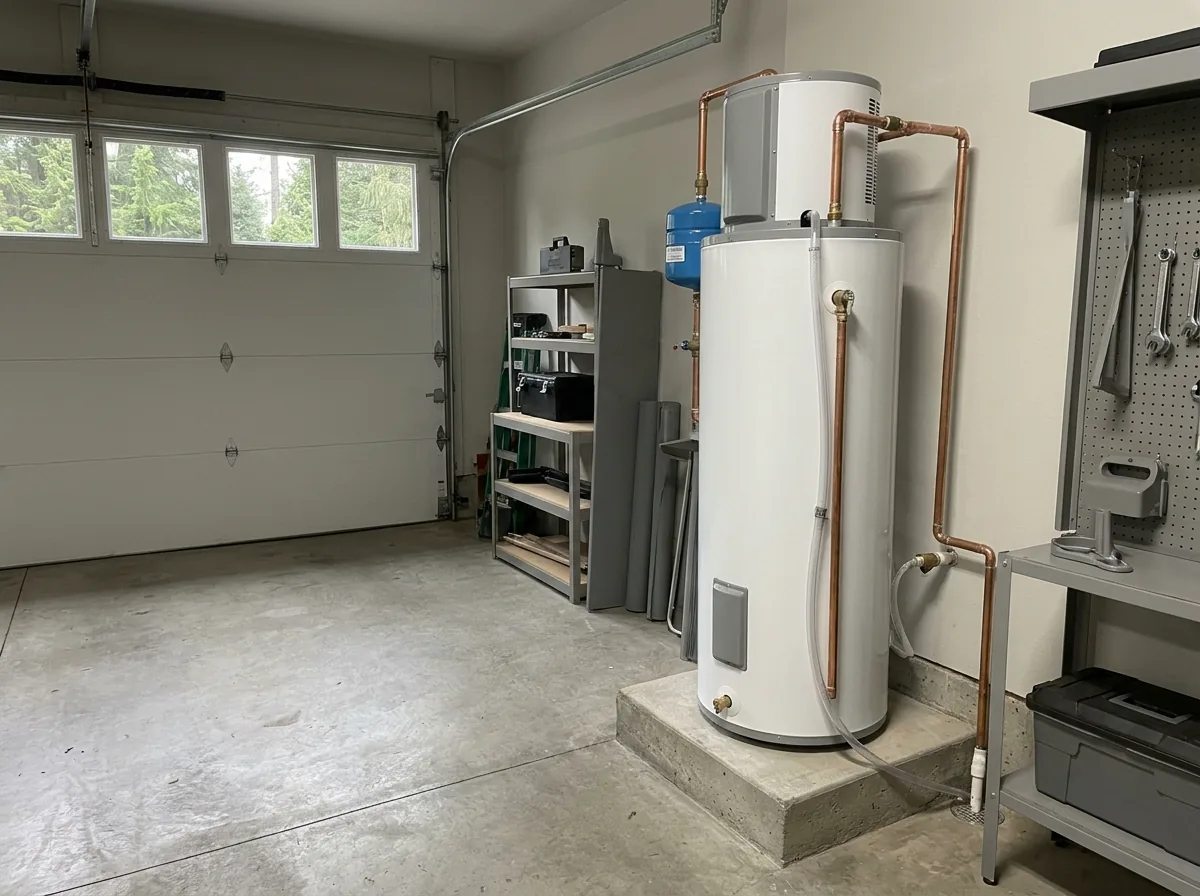
A pressure-reducing valve keeps street pressure off your fixtures, and it also stops heated water from pushing back into the main. IAPMO's commentary on the plumbing code names a pressure regulator among the devices that create a closed system. Kent's water utility shows each address's pressure zone on its GIS portal, which is a starting point for the charge setting.
- Air charge: match the static supply pressure, read at a gauge with a faucet opened and closed (Watts).
- Upper limit: 80 psi of air charge. Above that, Watts says to add a pressure-reducing valve or move the tank.
- Typical house pressure: 40 to 70 psi, per HomeGuide.
Homes Behind a Check Valve or Backflow Preventer
Kent's cross connection program requires owners to install and maintain backflow assemblies where they're needed and to have them tested every year by a state-certified tester. Each of those assemblies blocks water from flowing back to the main, which is the point, and it also leaves heated water nowhere to go. Rinnai's tankless manual says a heater on a closed supply, "such as one having a backflow preventer," needs a means to control thermal expansion. The tank goes on the building side of the device.
Sizing the Tank and Setting Its Air Charge
Size comes from three numbers: heater volume, supply pressure and the highest temperature setting. Amtrol's quick chart, based on 40°F incoming water and a 150 psi relief valve, gives:
- 40 or 50 gallon heater, up to 140°F: ST-5 (2 gallons) at 40, 60 or 80 psi.
- 60 or 80 gallon heater, up to 140°F: ST-12 (4.4 gallons).
- 120 gallon heater at 80 psi: ST-25V (10.3 gallons).
Watts says to set the charge before installation, with the tank empty, using a hand pump. The full tank hangs on the pipe, so the piping needs bracing, and the tank should sit where a future leak can drain.
Swapping a Waterlogged Tank
A tank whose air side has failed fills with water and stops absorbing anything. HomeGuide's warning signs include a relief valve that discharges often, banging in the pipes, rust on the shell and wet connections. Its replacement range is the same $300 to $800. Other work found on the same visit is priced separately:
- New pressure relief valve: $100 to $300.
- Pressure gauge added: $100 to $250.
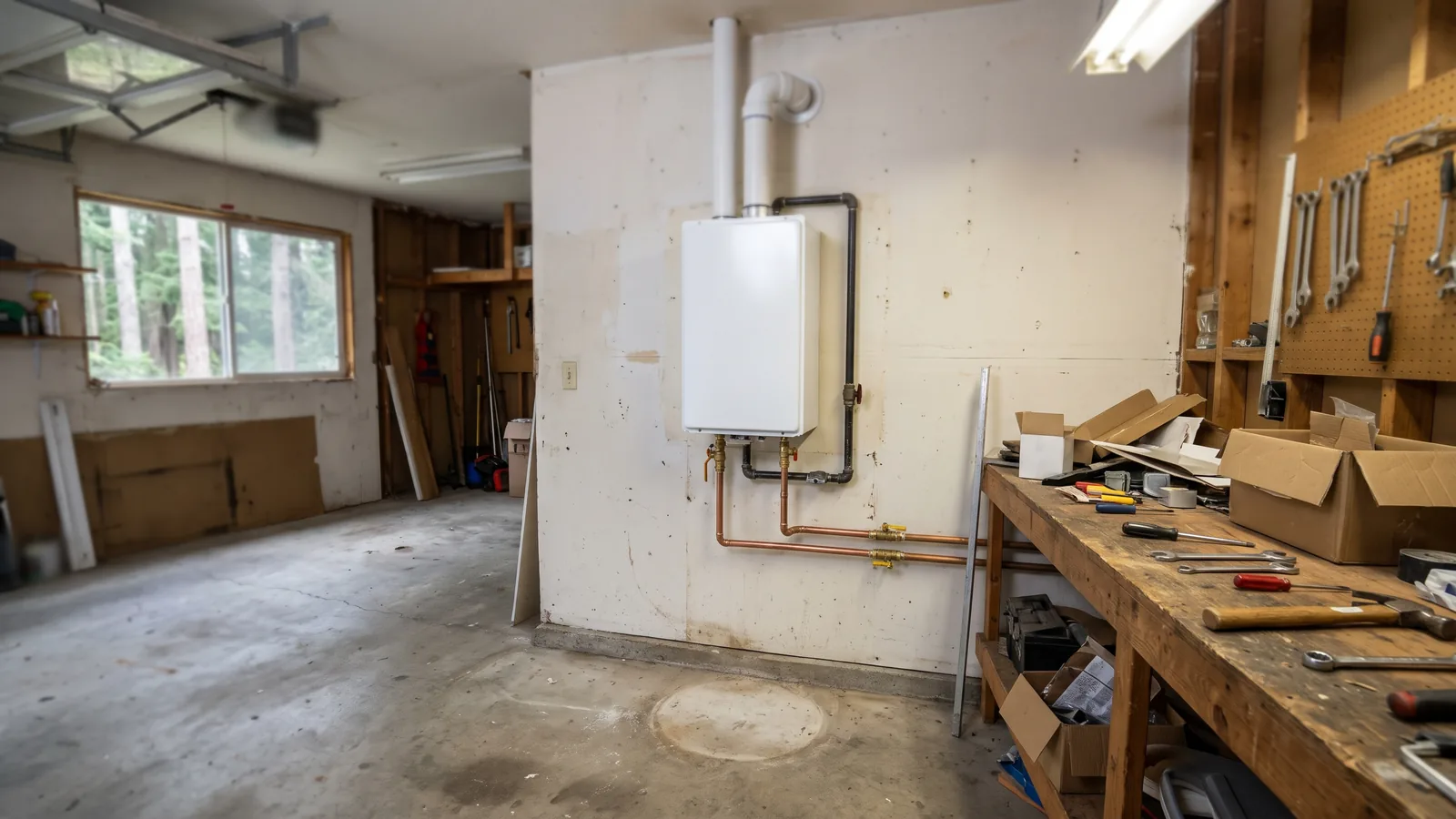
Wall-Hung Tankless Heaters on a Closed System
Section 608.3 applies "independent of the type of water heater used." A tankless heater holds little water, but the pipes still form a closed system, and HomeGuide notes some tankless models handle expansion internally. For small loads, Amtrol lists its ST-1, a 3-inch by 4-inch unit with a permanent air cell, for tankless and point-of-use heaters up to 2 gallons. The heater's manual decides whether the unit's own design counts.
Why Kent homeowners and businesses call Kent Tankless Water Heater
- Your details go to a single independent plumber, not a list of bidders
- The referral is free, and booking is your call
- Ask for gas line, vent and wiring costs as separate lines
- Ask which Kent and L&I permits the job needs
- Keep the down payment small and pay as work is finished
Thermal Expansion and the Code Requirement in Washington
Water barely compresses. IAPMO's illustrated code manual notes that a closed system builds high pressure even when water warms from 40°F to room temperature, and a storage tank adds more because of its volume and higher heat. Without somewhere to go, that pressure opens the relief valve. A.O. Smith's manual states that thermal expansion can cause early tank failure and that this kind of failure falls outside its limited warranty. The relief valve is meant to open in a fault, not every time the burner runs; the leak repair page covers how its discharge pipe has to be run.
Washington's plumbing code is the 2021 Uniform Plumbing Code with state amendments, and Kent's commercial plumbing checklist states the city upholds that code. Section 608.3 requires a listed, adequately sized expansion tank or similar device wherever a check valve, backflow preventer or other normally closed device keeps pressure from returning to the main. It must be installed and sized to the manufacturer's instructions. Washington's amendments to chapter 6 change the relief-valve discharge rules but leave 608.3 as written.
HomeGuide notes that many cities require a permit for this work, with fees of $20 to $100 or more. When the tank goes in during a heater swap, the water heater replacement page explains which Kent permit covers the swap; ask the plumber to list the expansion tank on it.