
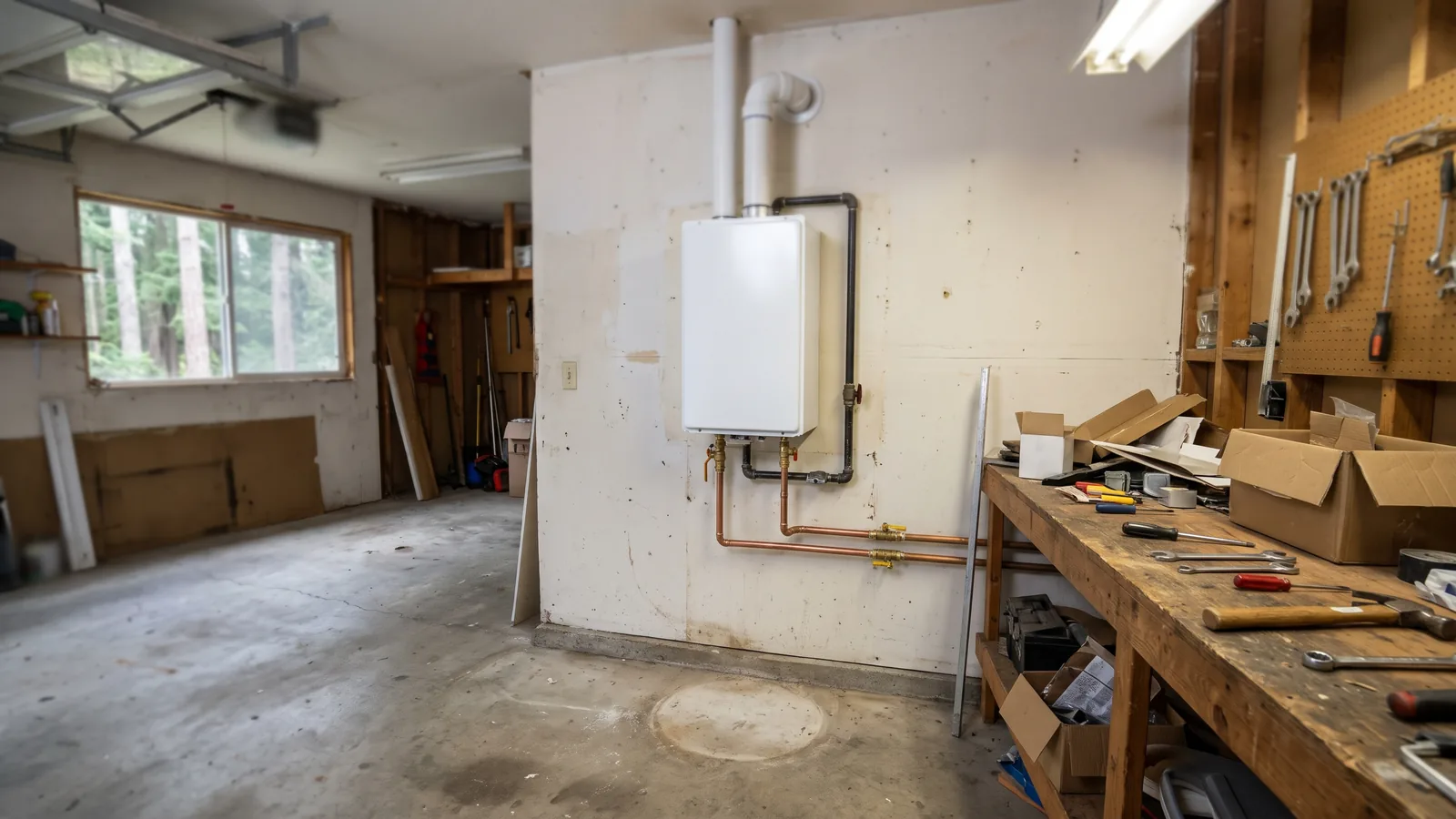
Tankless Water Heater Gas Line Work in Kent
A tankless burner draws its full input only while hot water runs, but that peak is large. The pipe, the meter and the pressure all have to handle that peak with the furnace and range running too. In Washington that piping falls under the state's adoption of the International Fuel Gas Code, which sits in the mechanical code, not the plumbing code.
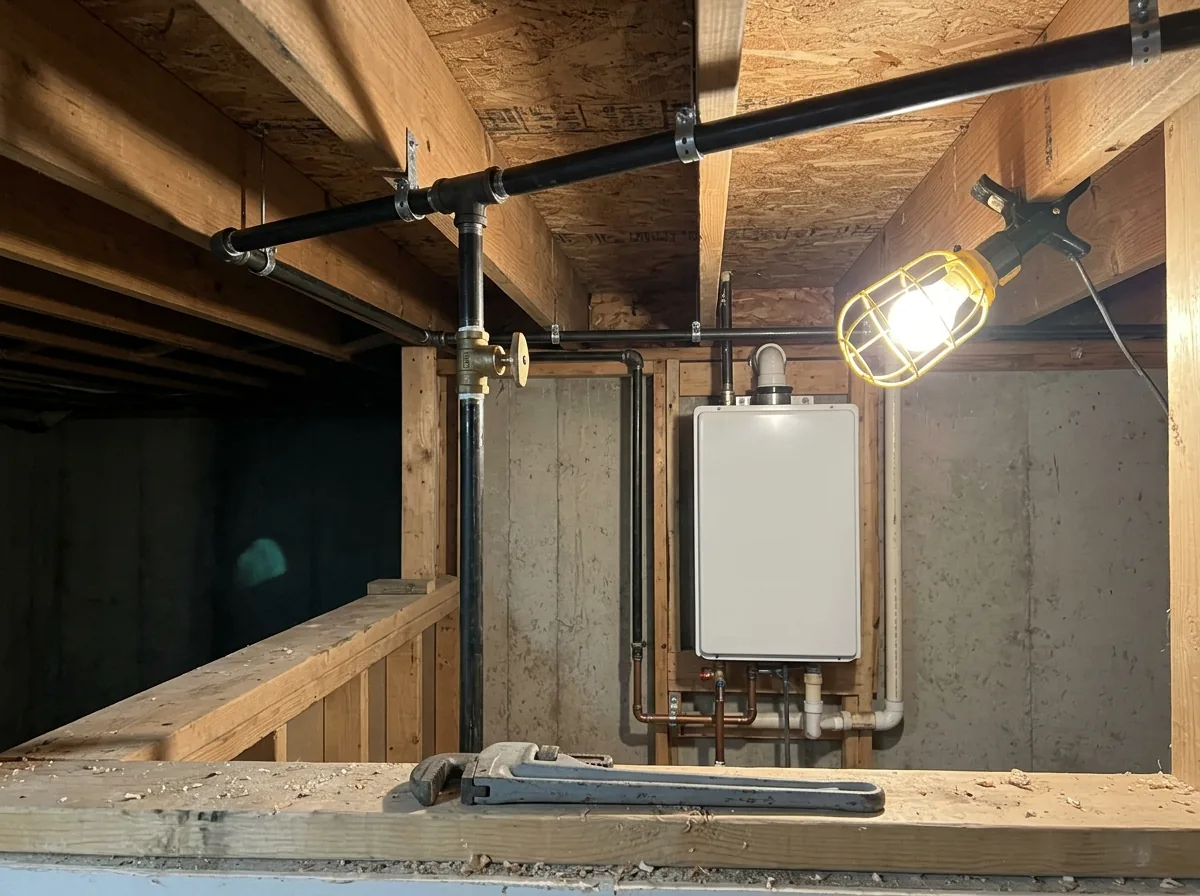
A Dedicated 3/4-Inch Branch From the Meter
The heater's own connection doesn't settle the pipe size. Rinnai's SENSEI units have a 3/4-inch gas inlet, but its manual says the supply line has to carry the heater's maximum demand plus every other gas appliance at the location without losing pressure. The table further down shows why a 1/2-inch line rarely carries a whole-house tankless heater at a 0.5-inch pressure drop, so the usual answer is a 3/4-inch or larger branch from near the meter.
PSE Meter Capacity and Upgrades
PSE asks to hear about added gas load before the fuel line changes. Its handout for adding or upgrading customer gas lines names on-demand (tankless) water heaters among the appliances that may need higher delivery pressure or more load. PSE wants to review the service and meter first, so any upgrade can be estimated and made, and those costs fall on the customer. Only a PSE natural gas technician may adjust the meter set; plumbers and homeowners may not. PSE's wording is to call before installing the appliance.
Steel Pipe or Flexible Gas Tubing
Rinnai lists pipe type as one of four things gas sizing depends on, along with gas type, pressure drop and supply pressure. Its printed tables are for Schedule 40 steel pipe, and the manual says to use the table for your gas type and pipe type, so flexible tubing is sized from its own tables, not these. Whatever the material, PSE requires the customer's fuel line to be bonded to the grounding system or the appliance it serves, and never grounded to PSE's riser or meter.
Sediment Trap, Shutoff and Union at the Heater
Three fittings belong right at the heater:
- Shutoff: a manual gas valve in the line to the heater (Rinnai).
- Union: above the shutoff, so the heater can be disconnected for service (Rinnai).
- Sediment trap: where the appliance doesn't have one built in, a tee with a capped nipple pointing down, downstream of the shutoff and as close to the inlet as practical (International Fuel Gas Code 408.4).
Rinnai also asks that pipe dope on the threads resist propane, even on a natural gas job.
Leak and Pressure Test Before the Meter Goes Back On
Before the heater fires, Rinnai's manual calls for a leak and pressure test. Joints get checked with a leak-detecting solution, then rinsed, since soap can corrode some fittings. For any test above 1/2 psi the heater and its shutoff are disconnected from the piping; for lower test pressures, its shutoff valve is closed. PSE's rule follows: the fuel line has to be inspected and approved under the local permit before PSE turns the meter on. PSE then turns on the gas and checks the new appliances. Kent permits gas piping as mechanical work (Kent permit steps).
Why Kent homeowners and businesses call Kent Tankless Water Heater
- Your details go to a single independent plumber, not a list of bidders
- The referral is free, and booking is your call
- Ask for gas line, vent and wiring costs as separate lines
- Ask which Kent and L&I permits the job needs
- Keep the down payment small and pay as work is finished
Tankless Gas Pipe Sizing by Btu and Length
Rinnai's method: add up the Btu input of every gas appliance, divide by about 1,000 Btu per cubic foot of natural gas, and read the pipe size off a capacity table for your pressure and pipe type. These are the NFPA 54 figures printed in its manual for Schedule 40 steel, natural gas, 0.5-inch water column pressure drop (cubic feet per hour):
| Longest run | 1/2-inch | 3/4-inch | 1-inch |
|---|---|---|---|
| 10 ft | 172 | 360 | 678 |
| 20 ft | 118 | 247 | 466 |
| 30 ft | 95 | 199 | 374 |
| 40 ft | 81 | 170 | 320 |
| 60 ft | 65 | 137 | 257 |
Reading it for a 199,000 Btu/h heater, which needs about 199 cubic feet an hour:
1/2-inch pipe
not enough even at 10 feet.3/4-inch pipe
enough out to about 30 feet.Add a 100,000 Btu furnace on the same pipe
about 299 cubic feet an hour, which takes 1-inch pipe at 40 feet.
At higher supply pressure the numbers change a lot. Rinnai's other table, for systems with at least 8.0 inches of supply pressure and a 3.0-inch drop, lets the same heater run on 1/2-inch pipe at 40 feet. That's why the PSE pressure question comes first. Rinnai notes the right table is the one in the code that applies; Washington's is the International Fuel Gas Code.