
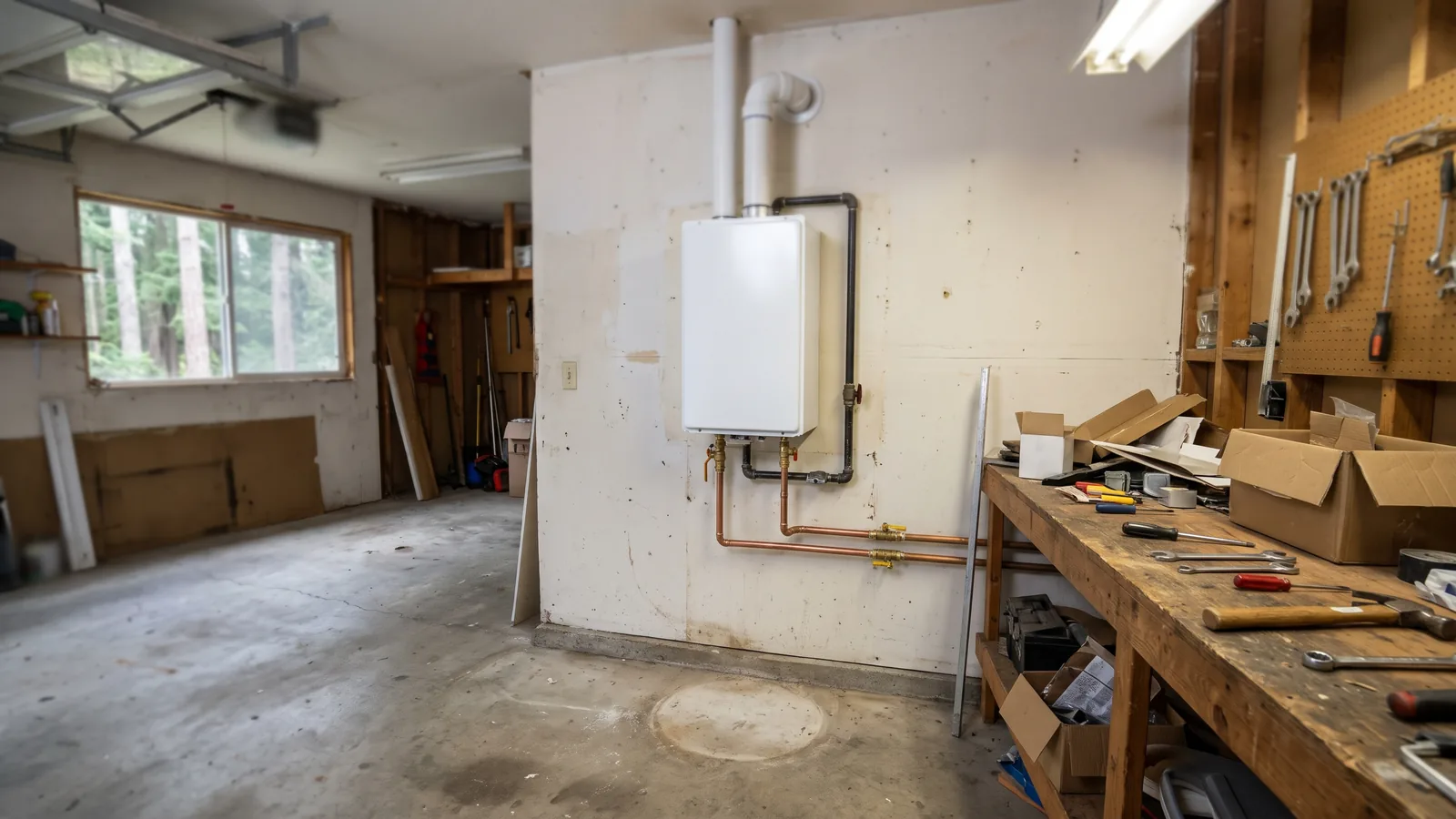
Multifamily Layouts: Apartments, Townhomes and Condos in Kent
The building decides the layout. A garden-style complex, a row of townhomes and a condo tower each have a different answer to where the heaters and vents go.
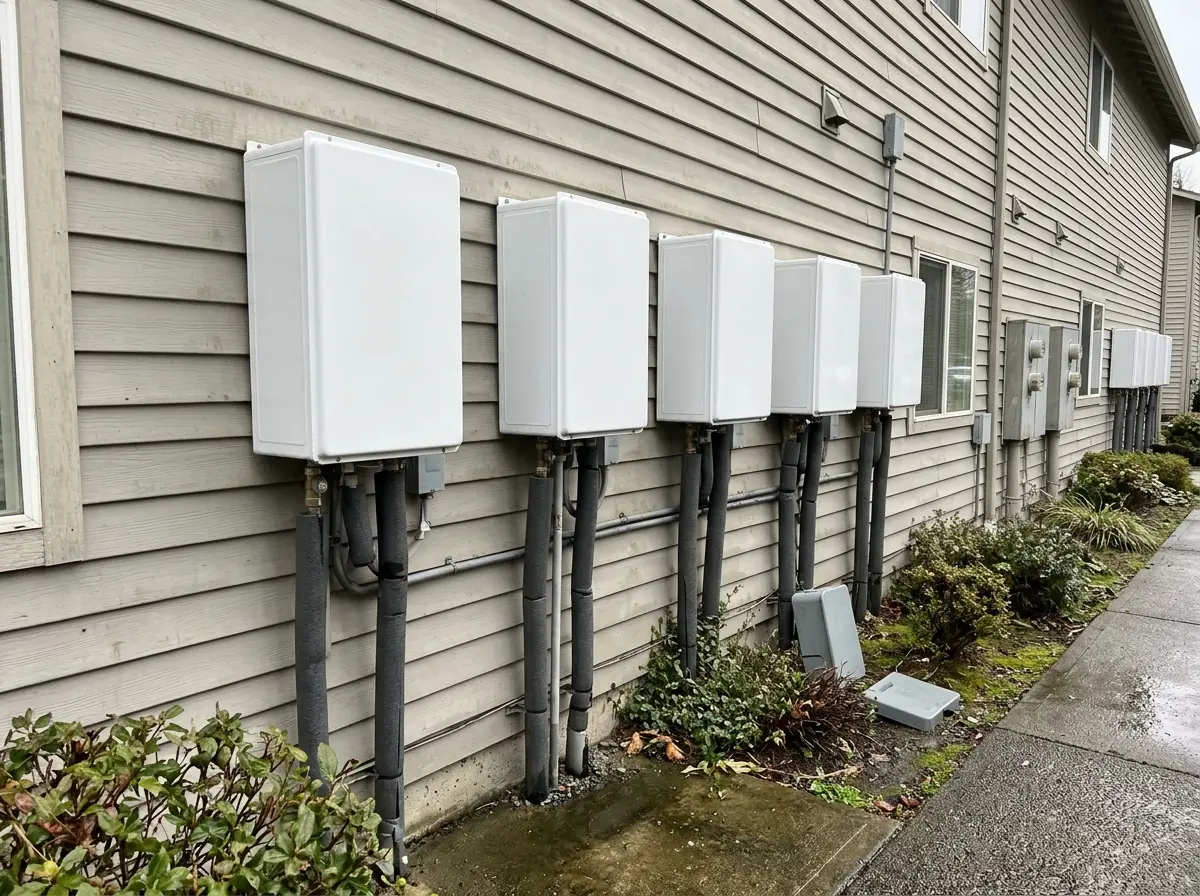
A Separate Heater in Each Apartment
Each apartment gets its own heater, so one failure affects one unit. Budget it per door: at HomeGuide's electric range, ten apartments come to $14,000 to $30,000 installed before any panel work, simple multiplication but a useful first check. A gas heater's vent still has to leave the apartment, and heaters in bedroom or bathroom closets carry extra rules, explained on the venting page. Electric units avoid venting but need heavy dedicated circuits; the electric tankless page covers panel capacity.
A Central Plant for the Building
The other approach is one bank of heaters serving every apartment. Navien's cascade fires the next heater when one reaches 80% of its capacity and balances the run time across all of them; Rinnai's racks hold up to six 199,000 Btu units each. A central plant needs a recirculation loop so far apartments don't wait for hot water, covered on the recirculation page. The rack and permit details are on the commercial tankless page.
Townhome Rows on Exterior Walls
Where townhome heaters sit against outside walls, each vent run is short, but the terminations end up close together along one facade, near windows, doors and the neighbor's vent. Washington's code makes the manufacturer's installation instructions binding, and those set the clearances; ask the plumber to check each termination against them before ordering heaters for the whole row.
Condo Owners and the Board's Sign-Off
Under Washington's common interest ownership act, fixtures inside a unit's boundaries belong to the unit, but where walls form the boundary, only their finished surfaces do; the rest of the wall is a common element unless the declaration says otherwise. An owner may not change the appearance of common elements without board approval, so a new vent cap needs the board's sign-off first. Boards approving many units at once should ask for one vent detail that every owner uses.
Scheduling Around Tenants
On a building-wide change-out, the notice rule below sets the pace more than the plumber does. HomeGuide's 3 to 10 labor hours per heater work out to one or two apartments a day for a single installer, so send entry notices in batches, work one stack at a time and get hot water back in each unit the same day. A heater that fails mid-project starts the 24-hour repair clock for that unit.
Why Kent homeowners and businesses call Kent Tankless Water Heater
- Your details go to a single independent plumber, not a list of bidders
- The referral is free, and booking is your call
- Ask for gas line, vent and wiring costs as separate lines
- Ask which Kent and L&I permits the job needs
- Keep the down payment small and pay as work is finished
Washington Rules That Shape a Multifamily Water Heater Job
Landlord's duty
RCW 59.18.060 requires facilities adequate to supply hot water as reasonably required by the tenant.Repair clock
RCW 59.18.070 gives 24 hours to start remedial work on lost hot water after written notice, 72 hours for a lost major plumbing fixture and 10 days for other defects.Entry
RCW 59.18.150 requires two days' written notice except in an emergency; tenants may not unreasonably withhold consent for repairs.Condos
RCW 64.90.210 and 64.90.255 define common elements and require board approval to change their appearance.Contracts
a multi-unit job is well past the $1,000 line at which Washington wants a signed contractor disclosure statement, so expect one with the bid.
Who may do the plumbing and gas work is covered on the water heater repair page, and Kent's permits for a heater swap on the replacement page.