
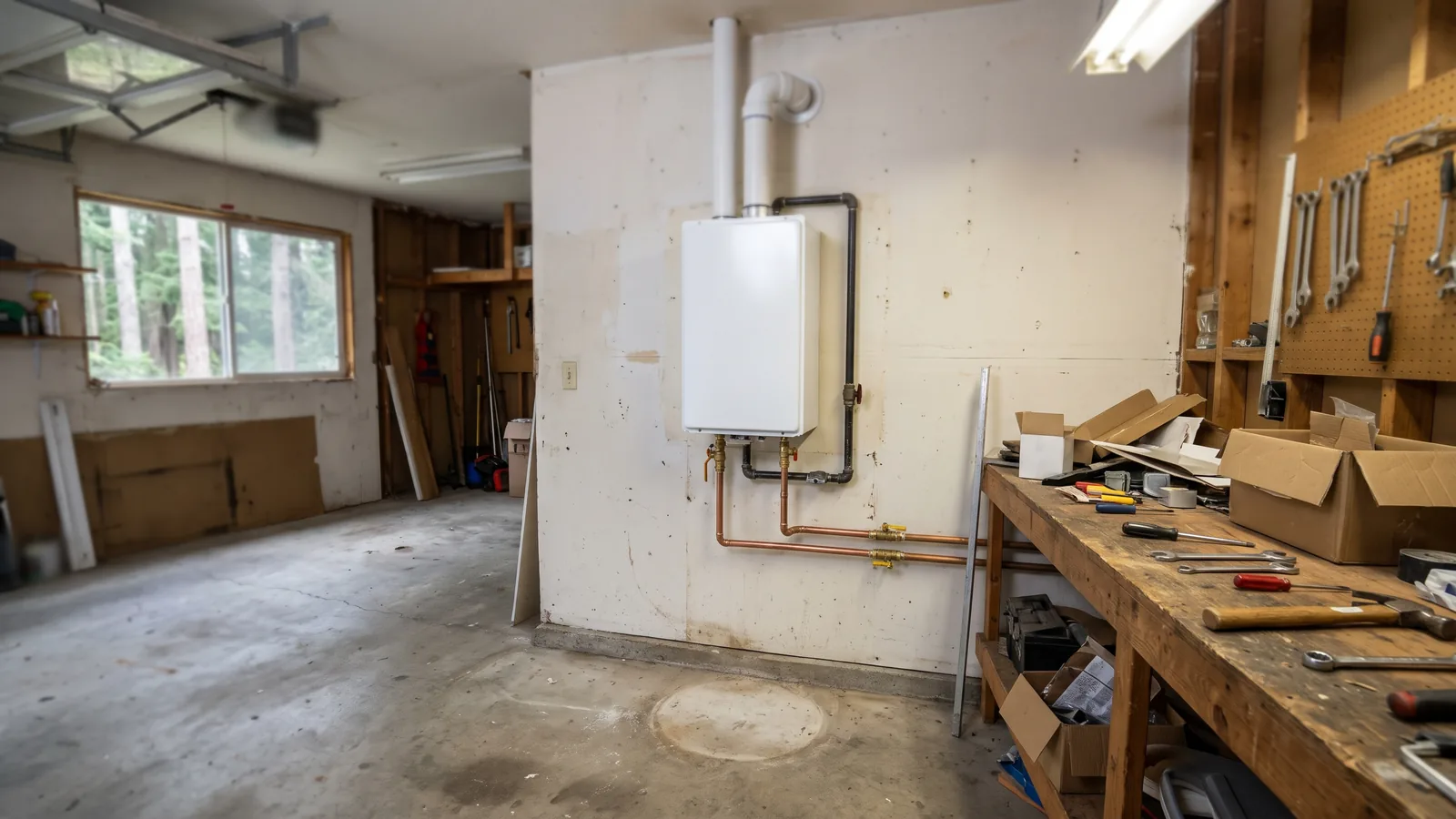
What a Tank Water Heater Service Covers
This page covers storage tanks. A tankless unit needs descaling instead of a sediment flush; that's on the tankless maintenance page.
Anode Rod Inspection and Replacement
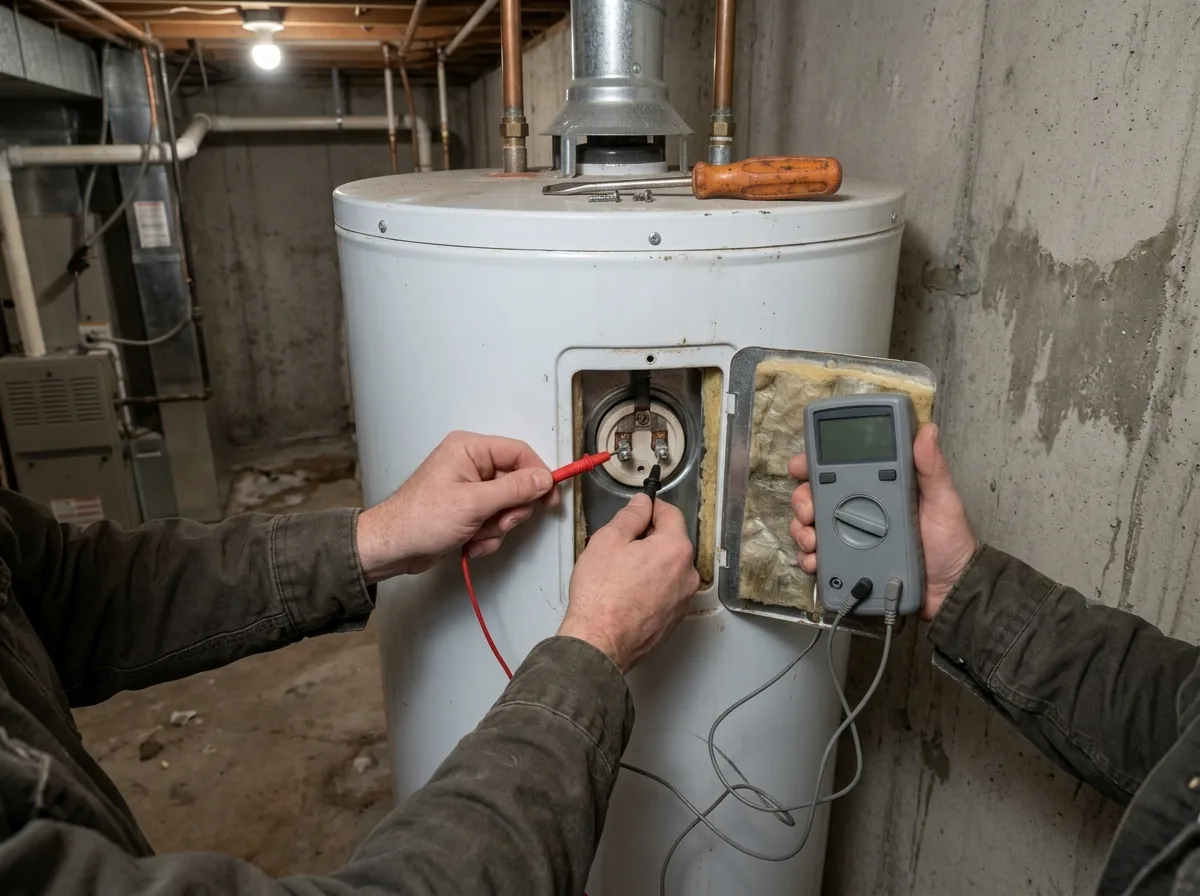
The anode is a metal rod hung inside the tank that corrodes in place of the steel. A.O. Smith's manual calls inspection and replacement required, and gives two signs a rod is spent:
- Thin core: most of the rod is under 3/8 inch across.
- Bare wire: about a third or more of the steel support wire shows.
HomeGuide lists three rod metals. Aluminum is the cheapest and protects least; magnesium protects better but can make the hot water smell; zinc lasts longer and cuts odor. The part alone costs $20 to $50. A.O. Smith warns that removing the rod for good voids the warranty.
Sediment Flush Through the Drain Valve
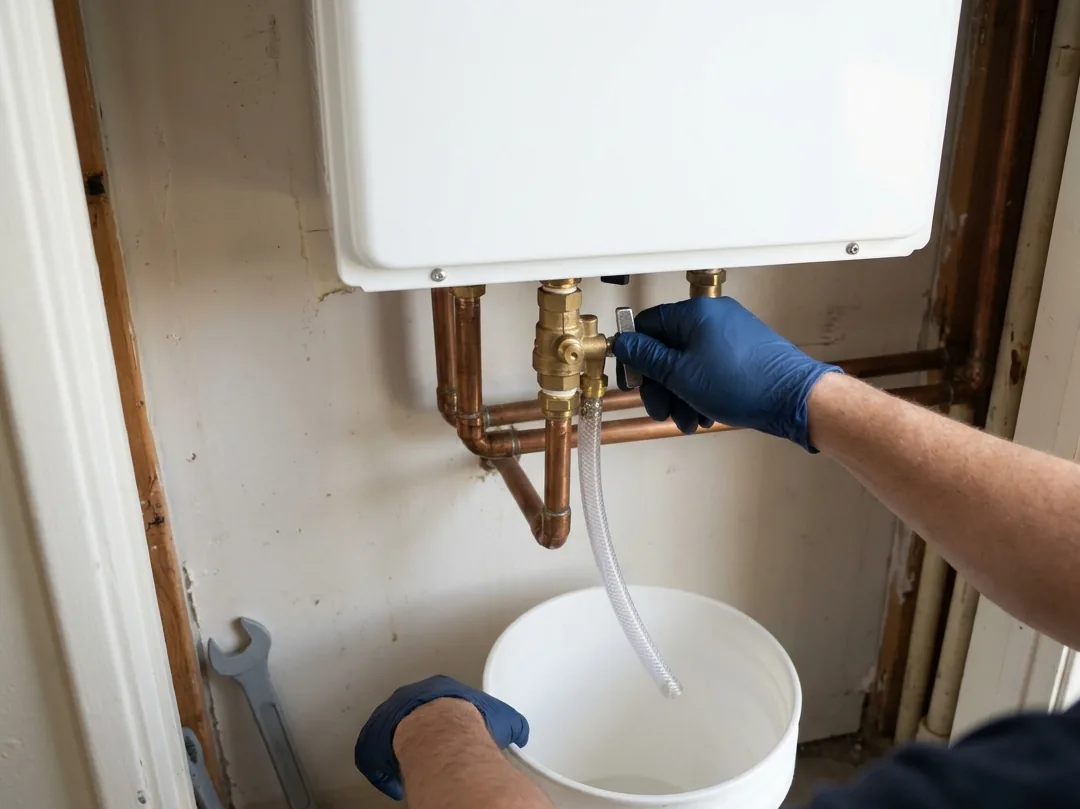
Minerals settle on the tank floor as the water heats. A.O. Smith's manual recommends draining and flushing every 6 months, and says sediment on the bottom is what makes a tank rumble or percolate. HomeGuide adds that it damages the lower element on electric tanks, corrodes the tank and can block the drain valve. The flush runs water out through that valve until it comes out clear.
Lifting the Relief Valve Lever Once a Year
A.O. Smith asks for the relief valve to be checked at least once a year by lifting its lever several times; it should reseat and stop. One that keeps running after the test needs replacing. The valve's job and Washington's discharge pipe rules are covered on the leak repair page.
Gas Burner and Flue Check
A.O. Smith recommends a yearly check by a competent service person, since the gas parts wear over time, plus at least a yearly look at the vent for blockages. HomeGuide's tune-up list includes cleaning the burner and testing the flue pipe; a replacement flue pipe costs $100 to $350. Keep gasoline, solvents and adhesives away from a gas heater; A.O. Smith flags them as a fire and explosion hazard.
Electric Element and Thermostat Check
Electric tanks usually have two elements. HomeGuide's rule of thumb: lukewarm water points to the upper element, and hot water that runs out quickly points to the lower one. A new element runs $100 to $350. Fault-finding on parts that have already failed belongs to water heater repair.
Why Kent homeowners and businesses call Kent Tankless Water Heater
- Your details go to a single independent plumber, not a list of bidders
- The referral is free, and booking is your call
- Ask for gas line, vent and wiring costs as separate lines
- Ask which Kent and L&I permits the job needs
- Keep the down payment small and pay as work is finished
Anode Rods and Sediment on Kent Water
How fast a tank builds sediment depends on the water. HomeGuide says homes with hard water collect more and suggests flushing every 6 months there, against every 2 to 3 years on soft water. Kent's city water runs from soft to the low end of hard depending on the source; the water softener page sets out the city's figures.
A softener changes the anode schedule. A.O. Smith calls artificially softened water "exceedingly corrosive" because it swaps sodium for calcium and magnesium. With a softener in the house, it wants the anode checked every year and warns that a softener may shorten the tank's life. Hotter settings and heavy hot water use also wear the rod faster. Once the rod is gone, the manual says, the tank starts to corrode and eventually leaks, and HomeGuide's advice for a tank leaking from its body is a new heater. Plumbers commonly replace the rod every 3 to 5 years, per HomeGuide.
A Yearly Tank Checklist and What It Costs
National figures from HomeGuide; intervals from A.O. Smith's manual unless noted.
| Task | How often | Cost if a part or visit is needed |
|---|---|---|
| Drain and flush | Every 6 months (HomeGuide: at least yearly) | $75 to $150 |
| Anode inspection | By year three, then yearly | $150 to $350 for a new rod |
| Relief valve lever test | Yearly | $50 to $300 for a new valve |
| Gas burner and vent check | Yearly | $100 to $350 for a flue pipe |
| Electric element check | When hot water runs short | $100 to $350 per element |
| Full tune-up | Yearly | $100 to $500 |
Ask for the anode's condition and the flush water's color to be noted on the invoice. Over a few years, that record shows how quickly the tank is wearing.