
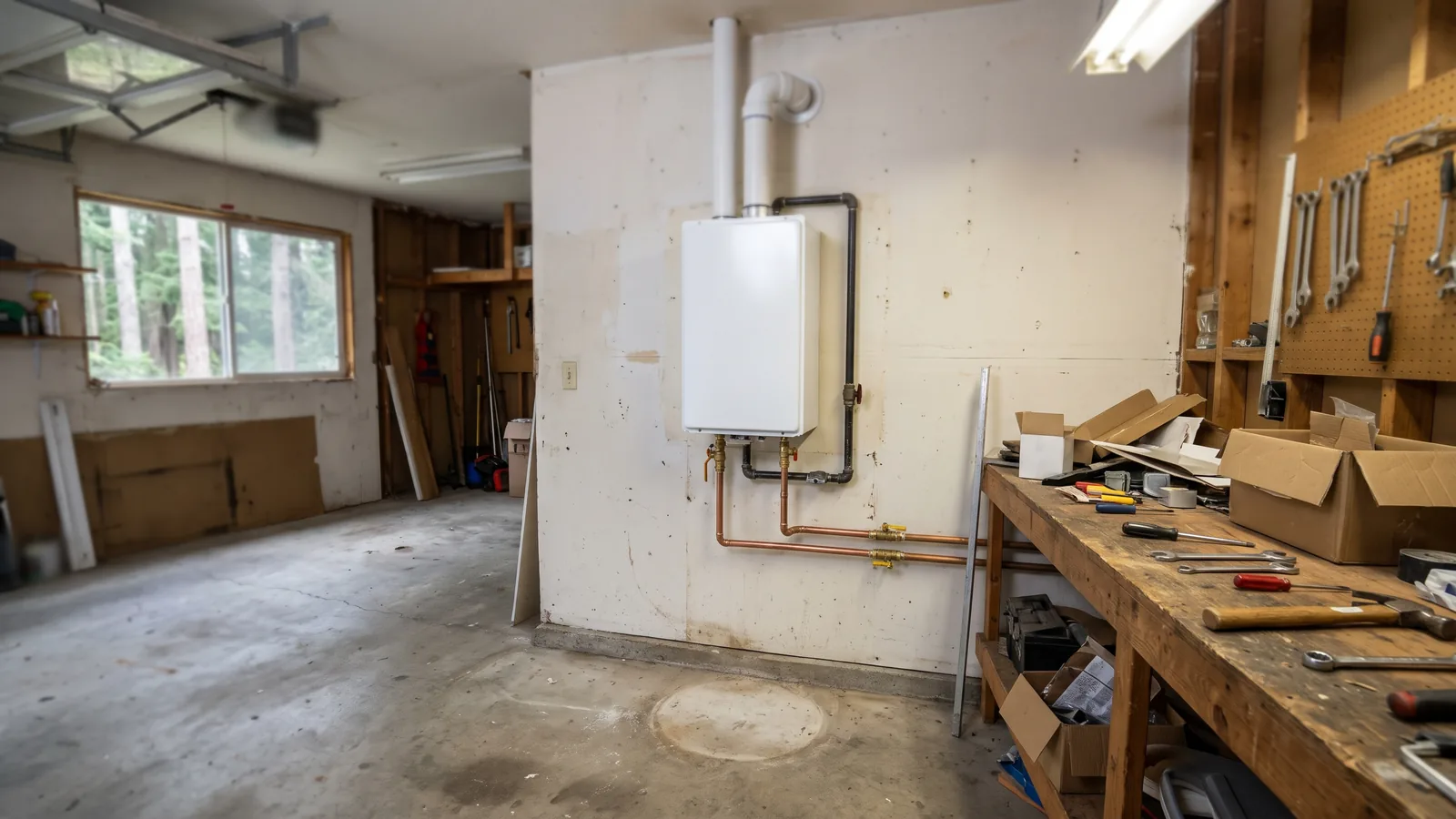
Tankless Water Heater Maintenance, Part by Part
The flush gets the attention, but a full service covers five areas. A condensing gas unit needs all five. An electric unit has no burner, vent or condensate, so its service is mostly the descale.
Descaling the Heat Exchanger With a Pump and Vinegar
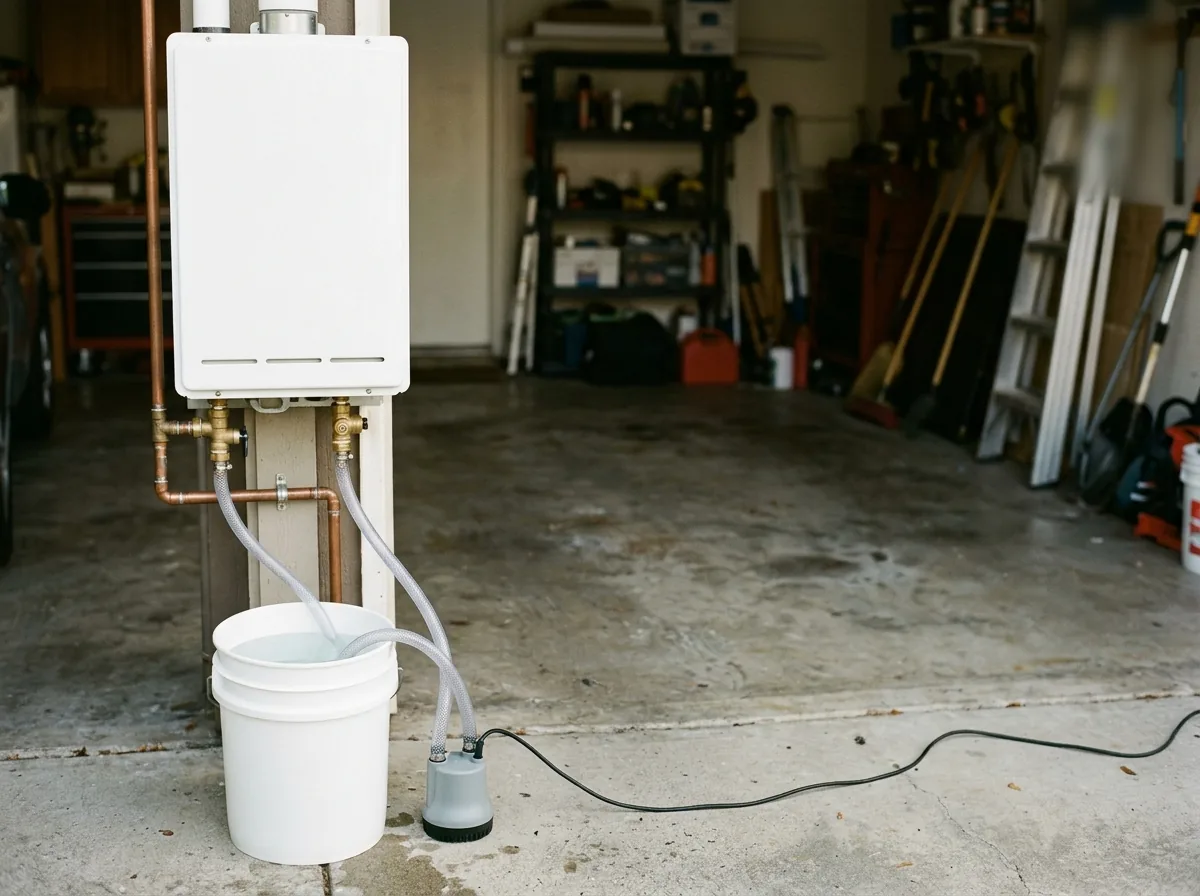
Scale is the mineral buildup hard water leaves inside the heat exchanger. Rinnai's procedure clears it like this:
- Gas off, controller off, and the hot and cold shutoff valves closed.
- One hose from a small pump to the cold-side service port, one from the hot-side port back to the bucket.
- Four gallons of undiluted white vinegar circulated at 4 gallons a minute for at least 60 minutes. On Rinnai's SENSEI RX, a descaling mode on the circuit board counts the minutes down.
- A five-minute flush with fresh water, then the inlet filter cleaned before the unit goes back on.
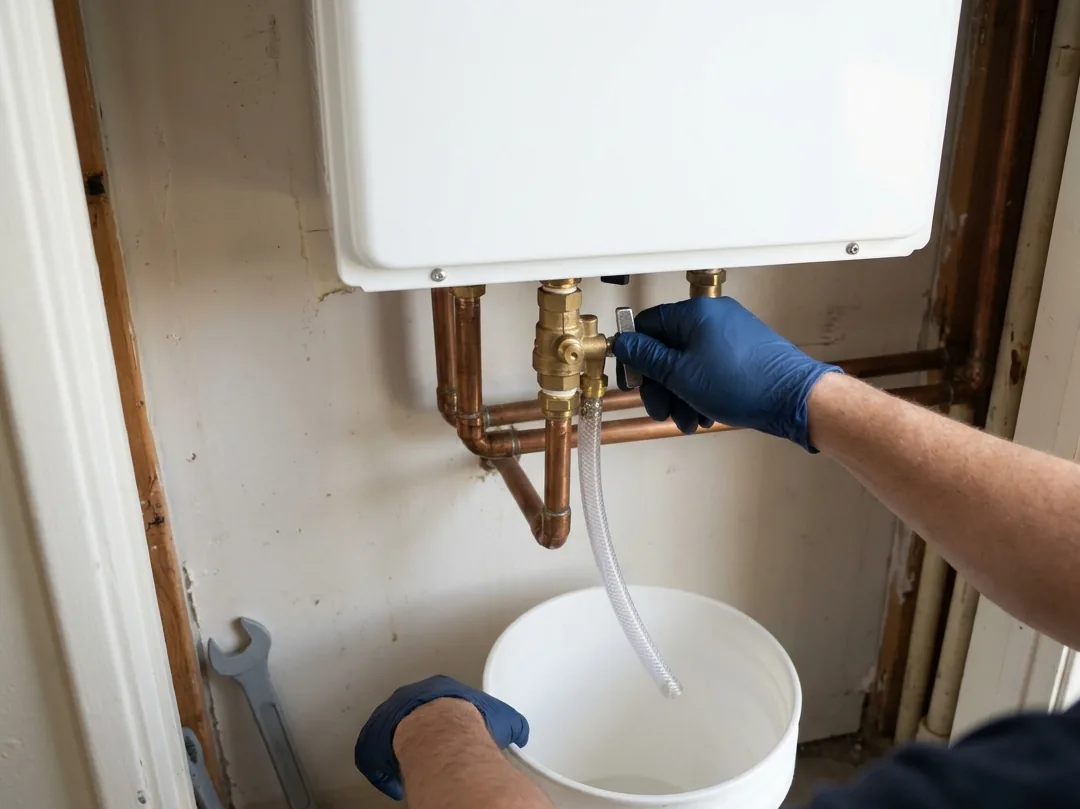
HomeGuide adds a leak check at the end, once the unit is back on. Rinnai strongly recommends isolation valves under the heater for this reason. A unit installed without them needs valves added before it can be flushed this way.
Rinsing the Inlet Water Screen
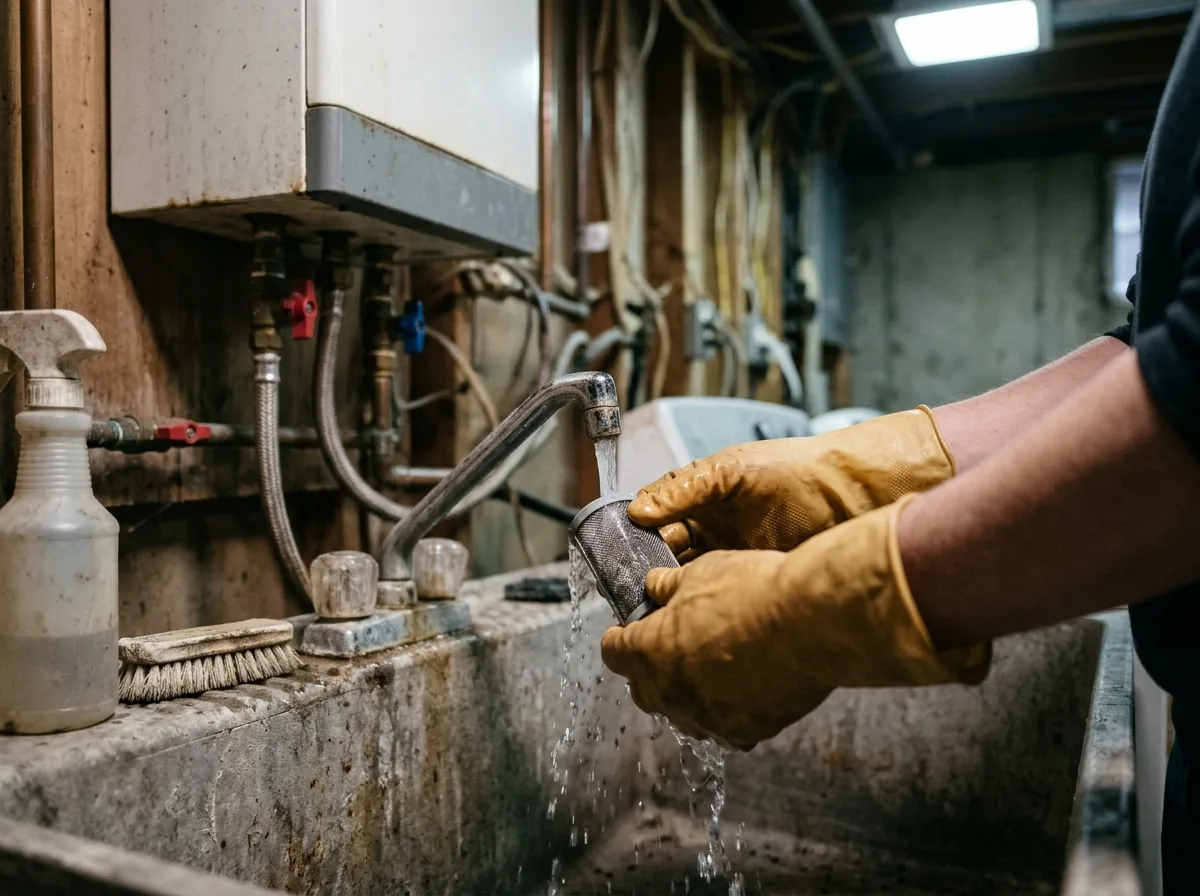
A small screen in the cold-water inlet catches grit before it reaches the heat exchanger. Rinnai has it cleaned at each service: close the isolation valves, unscrew the filter at the bottom of the unit, rinse it, and put it back.
Air Filter, Fan and Burner Cleaning
Gas units pull combustion air through a filter behind the front cover. Rinnai's manual has it cleaned with mild dish soap and a soft brush, dried, and checked for damage. Fan and motor should be cleaned of dust once a year. The service also covers:
- Vacuuming dust from the main burner and the fan blades, with no wet cloths or spray cleaners on the burner.
- Checking O-rings and gaskets before the cover goes back on.
- Inspecting the vent, including the screens in the outside termination, for blockages.
Condensate Trap Checks on Condensing Units
Condensing gas units produce acidic condensate as they run, as ENERGY STAR notes. Rinnai sells a neutralizer kit that passes it through media to raise its pH, which protects the drain and the public sewer. Maintenance means checking that condensate is flowing and the end of the drain is open, because a clogged or frozen line backs up into the trap and shuts the heater off. Drain routing and neutralizer installation are covered on tankless water heater venting.
Gas Pressure and Combustion Check
A careful technician also checks that the unit is getting the gas it needs. Noritz recommends a digital manometer for the reading, and Rinnai's troubleshooting guide measures inlet pressure with every gas appliance in the house on high fire. Low pressure shows up later as ignition codes; what those mean is on tankless water heater repair.
Why Kent homeowners and businesses call Kent Tankless Water Heater
- Your details go to a single independent plumber, not a list of bidders
- The referral is free, and booking is your call
- Ask for gas line, vent and wiring costs as separate lines
- Ask which Kent and L&I permits the job needs
- Keep the down payment small and pay as work is finished
Tankless Flush Interval for Kent Homes and Businesses
Manufacturers set the interval by water hardness and use. Rinnai's water treatment table:
| Hardness (mg/L) | Grains per gallon | Rinnai's flushing advice |
|---|---|---|
| 0 to 60 (soft) | 0 to 4 | None listed |
| 61 to 160 (slightly to moderately hard) | 4 to 9 | Once a year residential, twice a year commercial |
Rinnai's own FAQ goes further and asks for a flush at least once a year by a professional installer, whatever the hardness. Navien and Noritz also advise yearly service. HomeGuide suggests every 6 to 9 months on hard water. Kent's city water runs from Rinnai's soft band into the bottom of its moderately hard one, and some addresses are on other water districts; the numbers are on tankless water heater water softener. For most Kent homes that adds up to once a year, sooner if the controller shows LC.
Restaurants and other commercial users fall in Rinnai's twice-a-year column.
Two things slow the scale down between visits. Rinnai notes that scale forms faster at a high temperature setting, so a lower set point helps. And from 61 mg/L up, Rinnai's table recommends a water softener or a scale-treatment cartridge ahead of the heater, which tankless water heater water softener compares.
Tankless Water Heater Maintenance Cost
| Item | National range | Source |
|---|---|---|
| Routine flush and service | $150 to $350 | HomeGuide |
| Tankless flush | $150 to $250 | Angi |
| Yearly upkeep, electric unit | $150 to $600 | HomeGuide |
| Yearly upkeep, gas unit | $150 to $650 | HomeGuide |
Angi puts tankless flushes $75 to $100 above a tank flush, because of the extra components and scale. A service quote should say which of the five jobs above it includes and whether new filters are part of it. HomeGuide notes a technician may also replace filters, check the temperature setting and look for corrosion during the visit.
Questions worth asking before you book, drawn from HomeGuide's list:
- Which tasks will the visit cover, and is the price flat or hourly?
- Will the filters, valves and vent be inspected as well as the flush?
- If a fault turns up, can it be fixed on the same visit or does it need a return trip?
- How long will the hot water be off?