
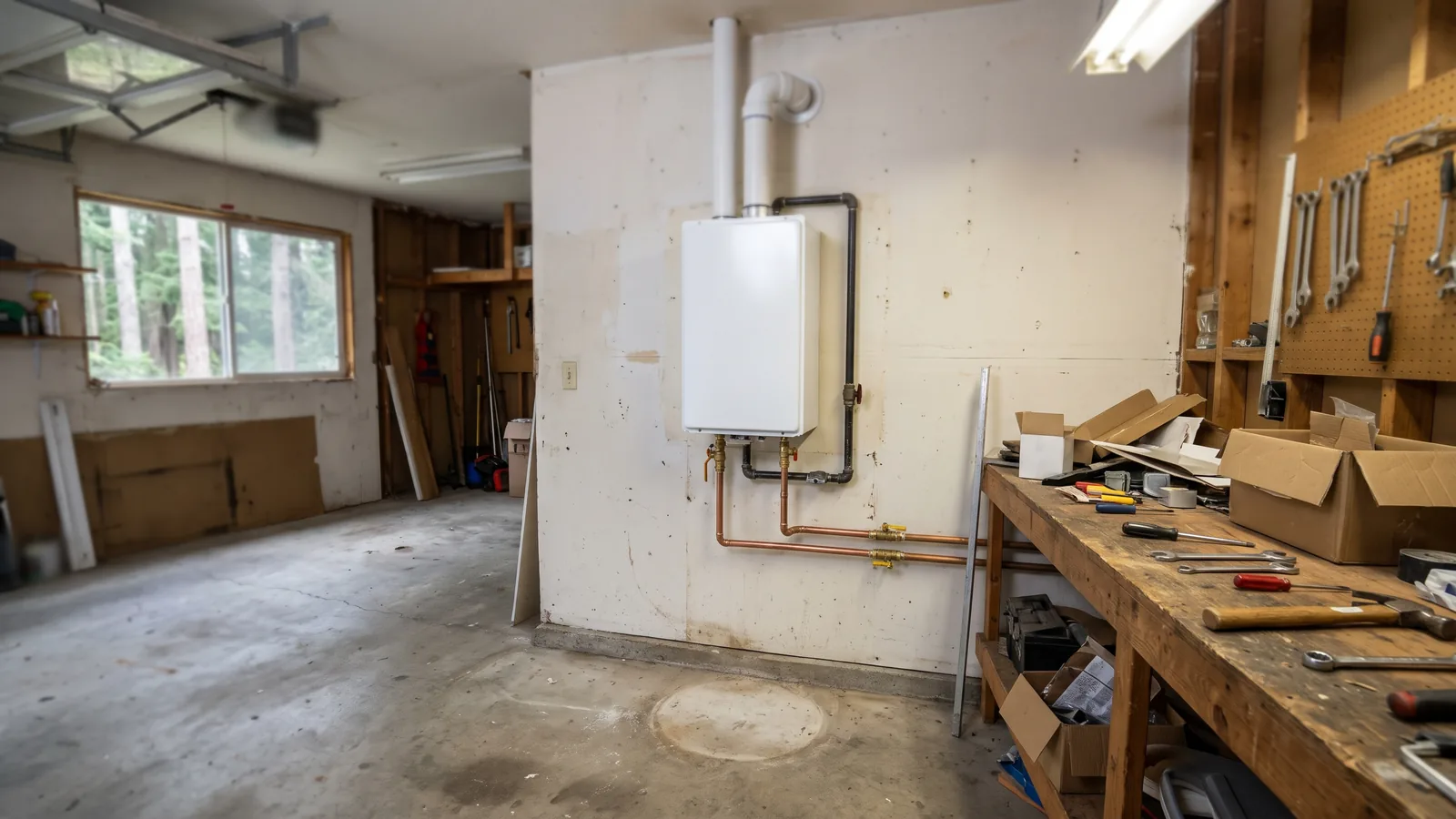
Water Heater Replacement Options for Kent Homes
Most replacements put back the same kind of heater on the same gas line or circuit. The sections below run from the simplest swap to a change of type.
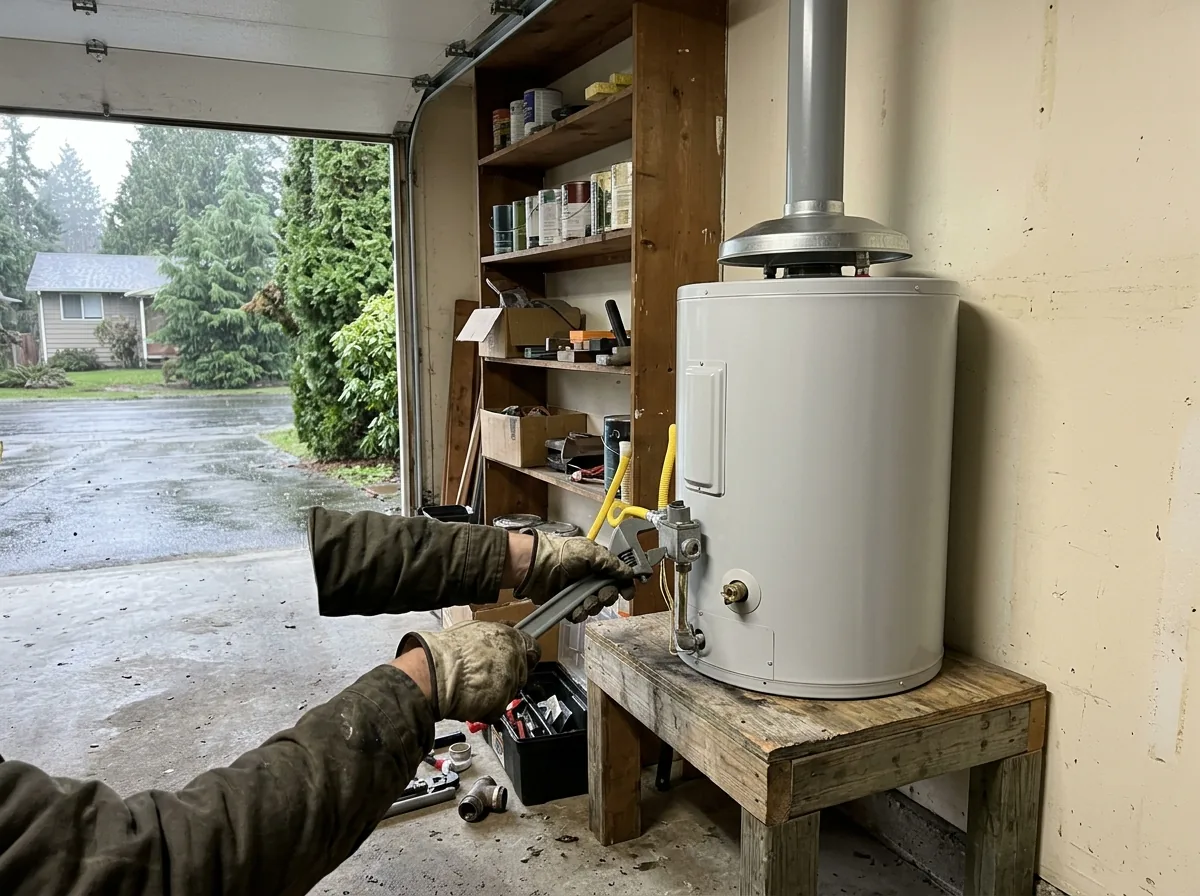
Gas Tank for Gas Tank
A new gas tank usually goes back on the existing gas line and vent, and HomeGuide notes that same-for-same swaps typically cost less than retrofits. Two things can add to it:
- Vent work: $100 to $600 to replace existing vent pipe, $500 to $1,500 where a vent is being installed for the first time (HomeGuide).
- Garage height: in a garage, Washington wants the burner at least 18 inches off the floor unless the heater is listed as flammable vapor ignition resistant.
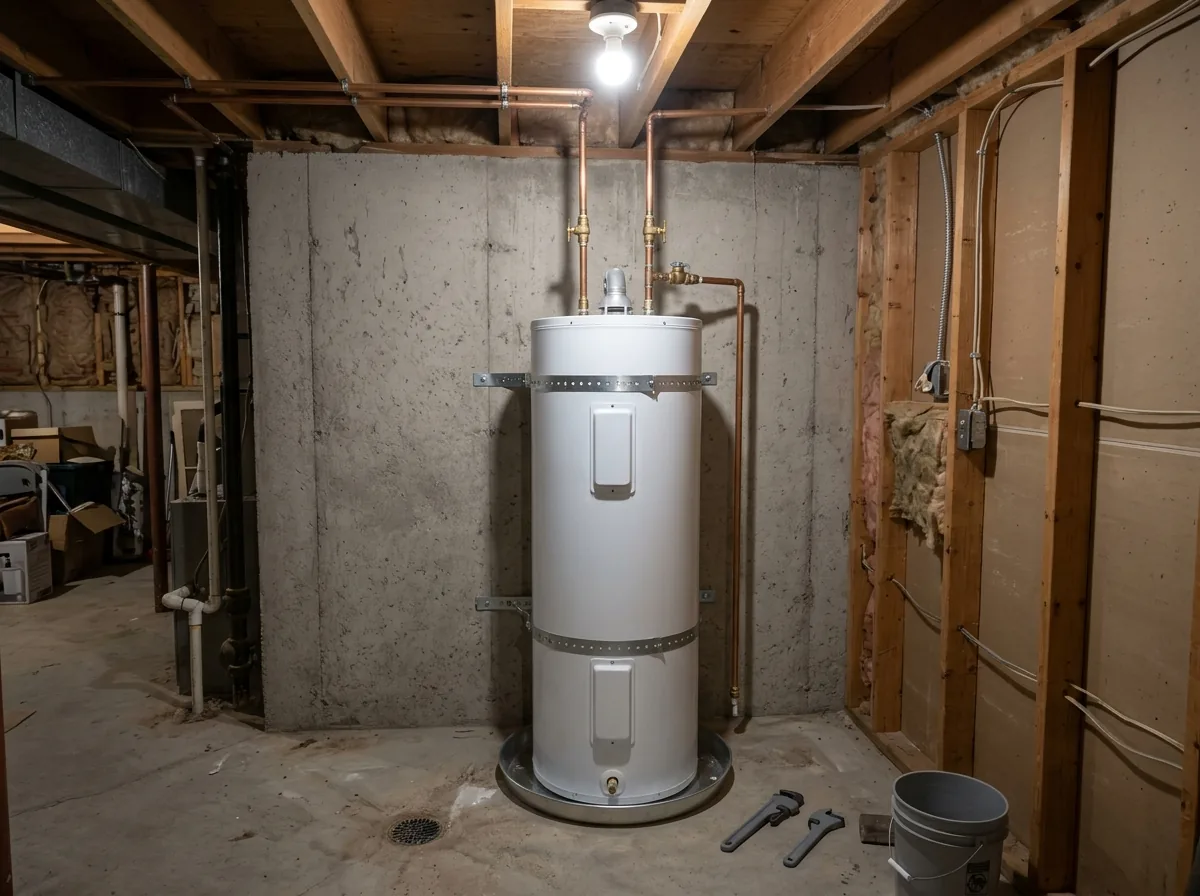
Electric Tank for Electric Tank
An electric swap reuses the existing circuit, so the work is mostly water connections and strapping. HomeGuide notes that electric tanks recover more slowly than gas ones and may need a bigger tank to keep up. If the old tank ran short, sizing up from 40 to 50 gallons is the moment to do it; HomeGuide pegs a 50-gallon tank to a household of 3 to 4.
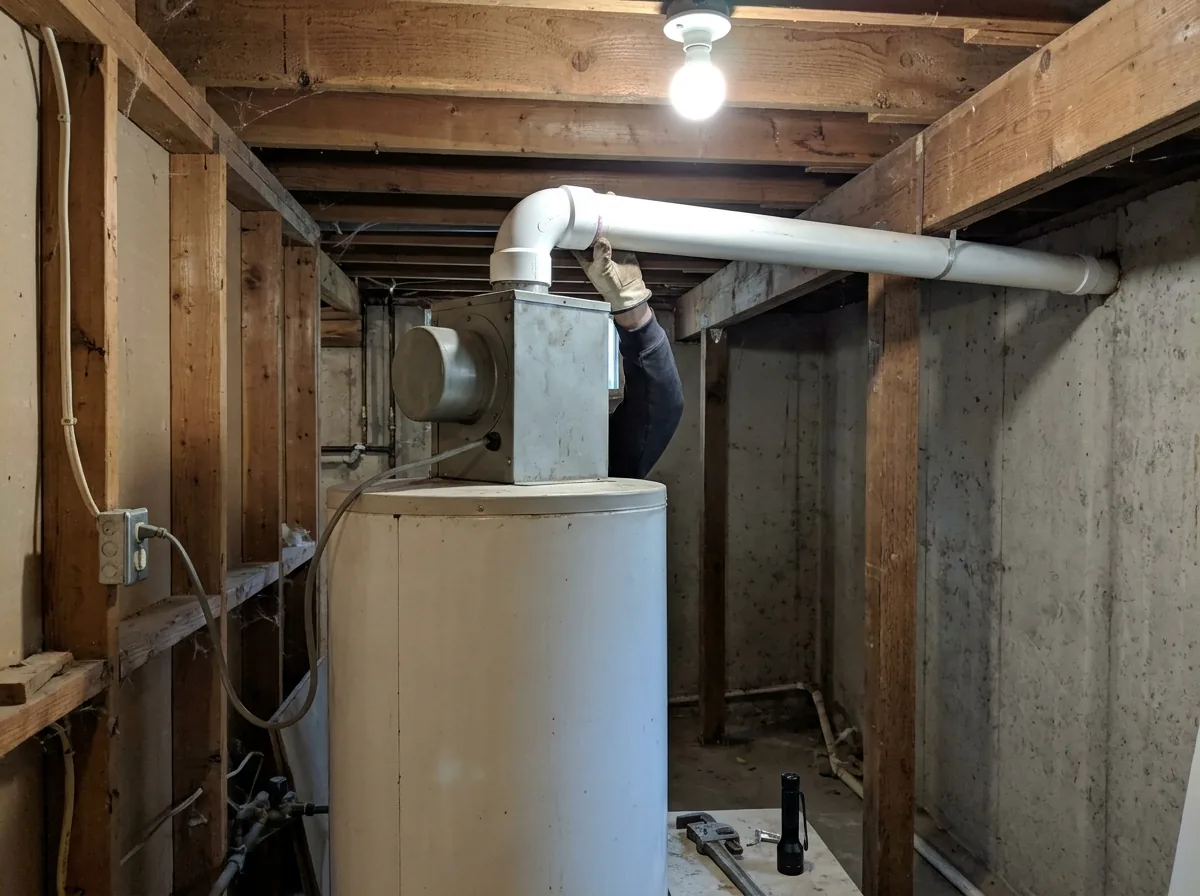
Power-Vent and Direct-Vent Replacements
Some gas tanks vent through their own pipe rather than a chimney. HomeGuide notes that a direct-vent model installs more simply, with no electric blower or wiring. A power-vent tank has that blower, which in A.O. Smith's manual runs on its own power cord, so it needs an outlet nearby. HomeGuide prices a power-vent model $350 to $500 above a direct-vent one. Replacing power-vent with power-vent keeps the existing vent run, as long as the new model's manual allows its length and elbows.
Replacing a Failed Heater the Same Day
When water comes from the bottom of the tank itself, HomeGuide says the whole heater typically has to be replaced. Shut the water and the gas or breaker off first (water heater leak repair covers those first minutes). An urgent swap still takes 2 to 6 hours. HomeGuide notes extra charges for emergency and after-hours installs, so ask for that line in writing before work starts.
Removing and Disposing of the Old Tank
HomeGuide puts removal and disposal at $75 to $500, depending on whether the tank has been drained and disconnected, and says most plumbers include it in the replacement price. Check that the quote says so.
Switching Type: Tankless or Heat Pump
A failed tank is the natural moment to change type, but it adds work. HomeGuide puts a fuel change from electric to gas at $400 to $2,000 or more, and gas to electric at $250 to $1,000 or more for the new circuit. A hybrid heat pump tank runs $2,000 to $4,600 installed. Both routes have their own pages: tank-to-tankless conversion and heat pump water heater installation, which also covers the PSE rebate.
Why Kent homeowners and businesses call Kent Tankless Water Heater
- Your details go to a single independent plumber, not a list of bidders
- The referral is free, and booking is your call
- Ask for gas line, vent and wiring costs as separate lines
- Ask which Kent and L&I permits the job needs
- Keep the down payment small and pay as work is finished
Water Heater Replacement Cost by Tank Size
HomeGuide's national installed prices for standard tanks. No guide publishes a Kent figure.
| Tank size | Unit only | Installed |
|---|---|---|
| 30 gallon | $300 to $900 | $500 to $1,900 |
| 40 gallon | $400 to $2,000 | $600 to $3,000 |
| 50 gallon | $500 to $2,100 | $700 to $3,100 |
| 75 gallon | $900 to $2,600 | $1,100 to $3,600 |
Labor alone runs $200 to $1,000. The extras that push a quote up:
Expansion tank
$100 to $400 (when one is required)Bringing old plumbing up to code
$75 to $500 or moreMoving the tank to a new spot
$500 to $2,500
Ask for the quote itemized, as HomeGuide suggests, with these on their own lines:
- The new heater's fuel, gallon size and model.
- Removal of the old tank.
- The Kent permit, and who files it.
- Any change to the vent, gas line or circuit.
- Emergency or after-hours charges, if the swap is urgent.
On a residential job of $1,000 or more, Washington also requires the contractor to hand you a signed disclosure statement about its registration, bond and lien rights.
Kent Permits and Earthquake Strapping for a New Tank
Kent requires a residential permit to alter a gas or plumbing system, and its permit page sorts water heater swaps by fuel:
Electric tank
Residential Plumbing, filed as a Minor Work Permit with the Plumbing sub-type.Gas tank
Residential Mechanical, the same Minor Work Permit with the Mechanical sub-type. The gas piping is covered there too.
Kent's plumbing minor permit is written for work in the same location without removing drywall or framing, so a move that opens walls may fall outside it; ask. Both go in online through Kent's permitting portal, with no intake appointment and no formal review. Kent typically processes them in 2 to 3 business days and then contacts you with payment instructions; intake fees unpaid after 15 days cancel the application. Inspections can be booked for as soon as the next business day. Kent's 2026 fee table has no water heater line, so the fee isn't published. Ask what the permit adds to the quote. Any new wiring is permitted by Washington L&I, not the city.
Strapping is the other code item on every tank. Washington's amendment to the plumbing code (section 507.2) says:
Two straps
one within the upper third and one within the lower third of the tank's height.Clear of the controls
the lower strap at least 4 inches from the gas valve or thermostat.
The same code requires every heater to be installed to its manufacturer's instructions. The relief valve's discharge pipe has its own rules, set out on water heater leak repair.