
Water Heater Repair Jobs on Kent Tank Heaters
This page covers storage tanks, gas and electric. Each section names the part, what it does when it fails, and what the national cost guides say the repair costs.
Pilot, Thermocouple and Burner Faults on Gas Tanks
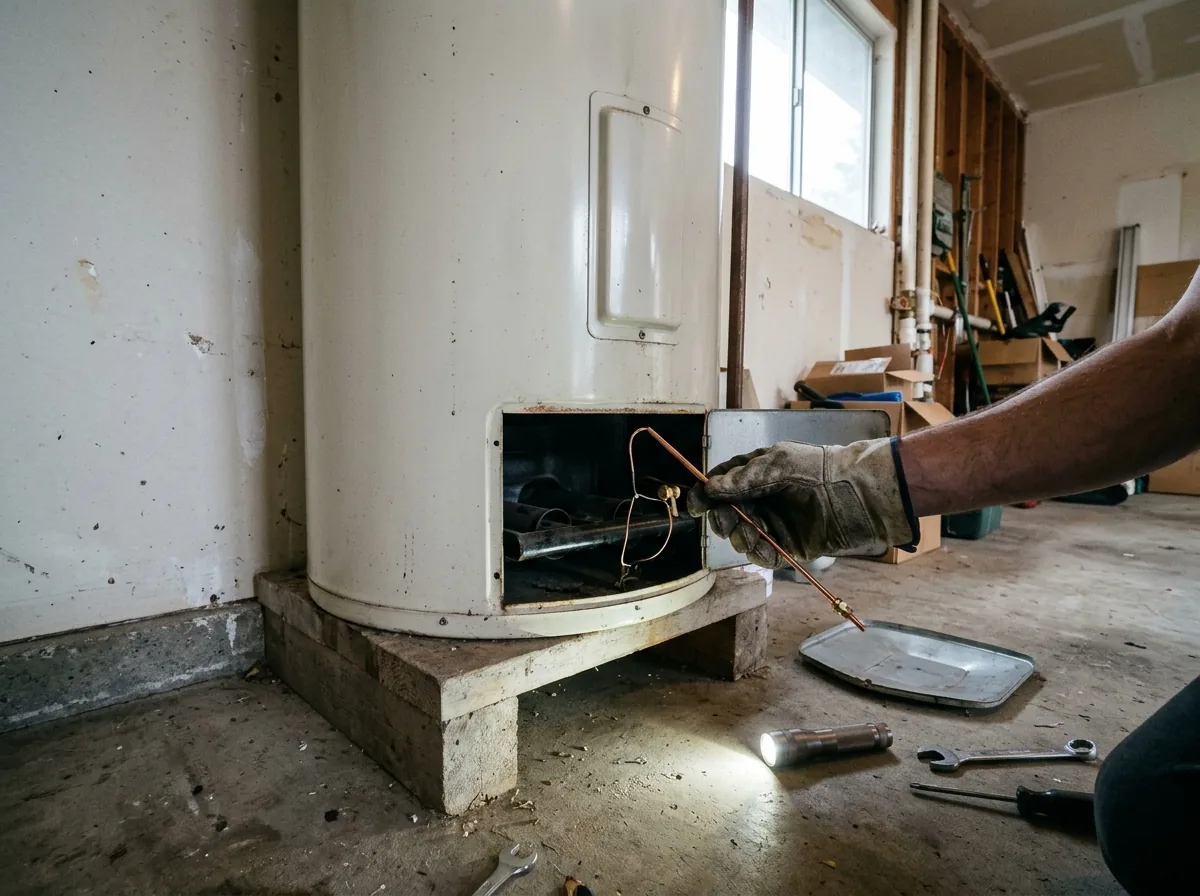
On an older gas tank, a pilot flame lights the burner, and a thermocouple sitting in that flame tells the gas control valve it's safe to open. A failed thermocouple leaves the tank with no hot water, and HomeGuide calls its replacement the most common repair on gas tanks. Tanks with electronic ignition use a spark igniter to light the pilot instead.
- Thermocouple replacement: $100 to $325
- Pilot light replacement or relight: $50 to $200, usually an hour or less
- Igniter repair on electronic-ignition tanks: $75 to $350
If the pilot won't light at all, HomeGuide points to the thermocouple or the gas control valve as the likely cause.
Electric Elements and Thermostats That Fail
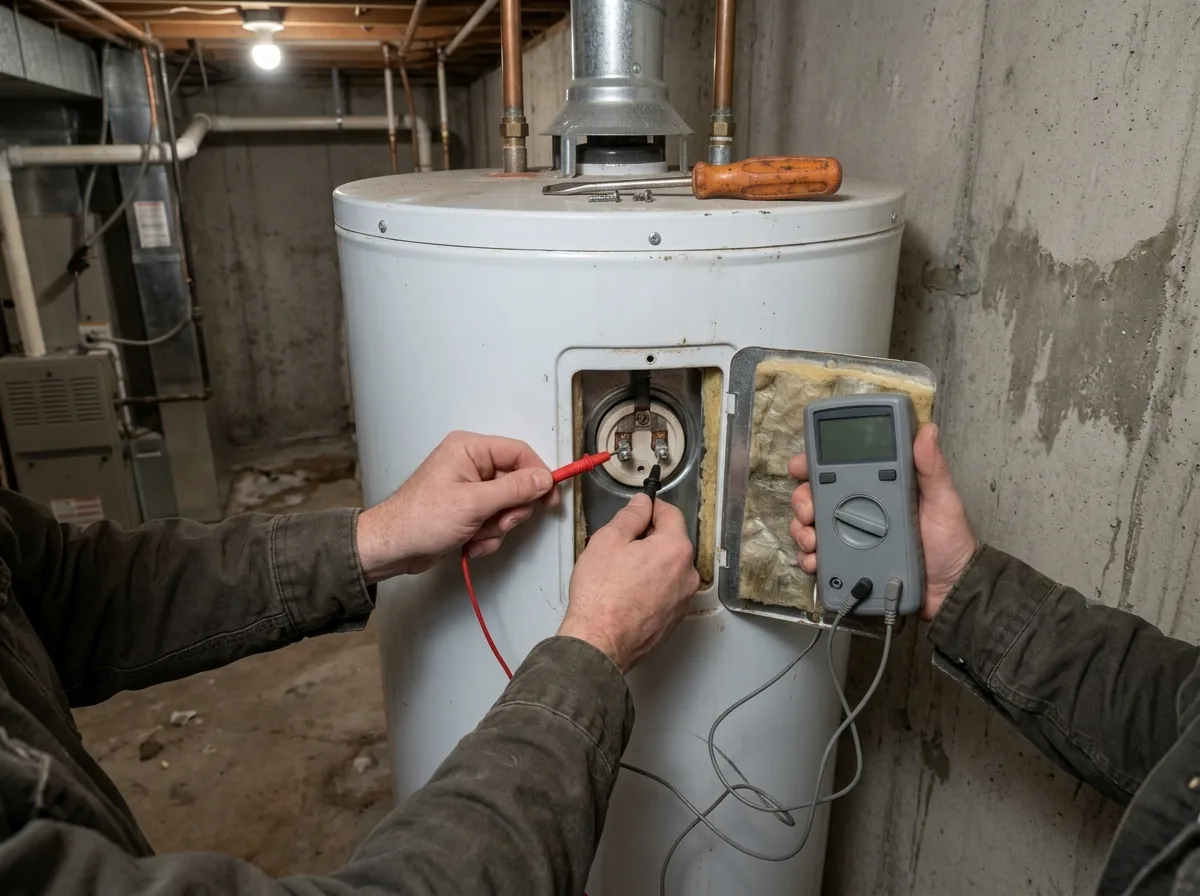
Most electric tanks have two elements, one near the top and one near the bottom, each with its own thermostat. The symptom usually tells you which one has failed:
- Steady lukewarm water: upper element.
- Hot water that runs out fast: lower element, which sediment on the tank floor tends to corrode.
- No hot water at all on a two-element tank: upper thermostat. A failed lower thermostat only shortens the supply.
HomeGuide puts element and thermostat replacement at $100 to $350 each. Electric thermostats come out one at a time; on a gas tank the thermostat lives inside the control valve, so the whole valve is replaced.
Gas Control Valves and Power-Vent Blowers
The gas control valve holds the thermostat and the pilot controls and meters gas to the burner. Replacing it runs $150 to $550, per HomeGuide, which also warns that a failing valve can leak gas: shut the gas off and call for help if you smell it.
Power-vent tanks add an electric blower that pushes the exhaust out. In A.O. Smith's power-vent manual, an air pressure switch shuts the heater down when the exhaust is blocked or badly restricted, and a status light flashes a code. The troubleshooting steps start with the blower, the pressure-sensing tubes and the vent length and elbow count before any part is replaced. A damaged flue pipe on a standard tank costs $100 to $350 to replace.
Short on Hot Water: Dip Tube, Sediment or a Tank Too Small
The dip tube carries incoming cold water to the bottom of the tank. When it cracks, cold water mixes into the hot near the top and showers turn tepid. A new dip tube costs $100 to $300 installed. If the water is hot but simply runs out, the tank may be too small for the household, and repair won't fix that. HomeGuide sizes a 40-gallon tank for 1 to 2 people and a 50-gallon tank for 3 to 4. Swapping to a bigger tank is covered on water heater replacement.
Popping Noises From Sediment in the Tank
HomeGuide lists sediment buildup as the cause of noise from the tank and prices a drain and flush at $75 to $250. Rusty water or a foul smell points instead to corrosion or a spent anode rod. How often to flush and when to change the anode is on water heater maintenance. For water on the floor, go to water heater leak repair.
When the Heater Is Tankless
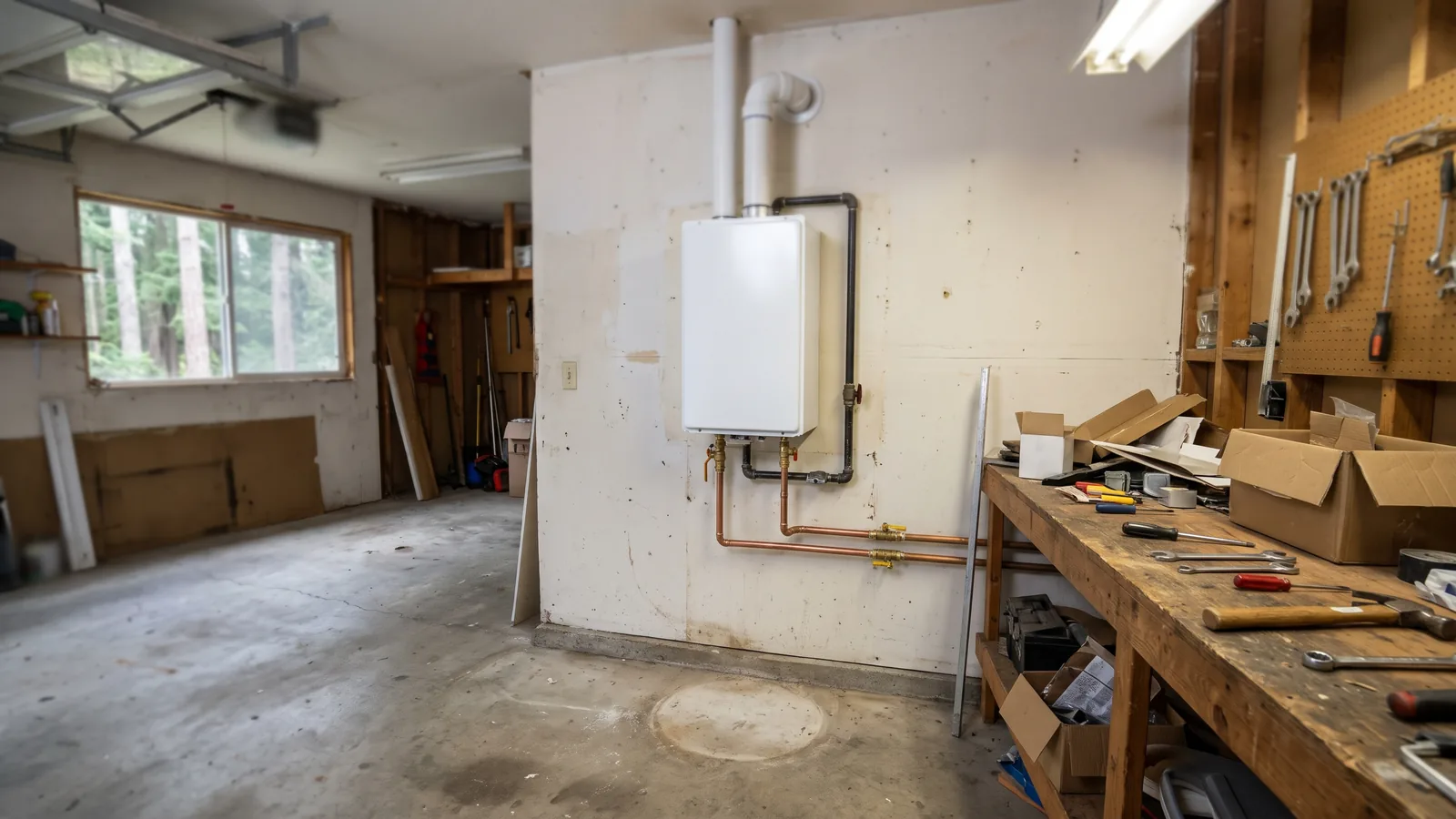
Tankless units fail in different ways: ignition lockouts, scale warnings and display codes. HomeGuide's range for tankless repairs is $300 to $1,300, roughly double a tank fix. Those faults have their own page: tankless water heater repair.
Why Kent homeowners and businesses call Kent Tankless Water Heater
- Your details go to a single independent plumber, not a list of bidders
- The referral is free, and booking is your call
- Ask for gas line, vent and wiring costs as separate lines
- Ask which Kent and L&I permits the job needs
- Keep the down payment small and pay as work is finished
Water Heater Repair Cost in Kent
No guide publishes a Kent figure, so these are HomeGuide's national prices, parts and labor together. Expect a call-out fee of $50 to $200 on top, and plumber time at $45 to $150 an hour.
| Repair | National range |
|---|---|
| Thermocouple | $100 to $325 |
| Gas control valve | $150 to $550 |
| Heating element | $100 to $350 |
| Thermostat | $100 to $350 |
| Dip tube | $100 to $300 |
| Pressure relief valve | $50 to $300 |
| Anode rod | $150 to $350 |
| Drain and flush | $75 to $250 |
When the quote climbs, compare it with a new heater. A standard tank costs $600 to $3,100 installed, per HomeGuide, whose rule of thumb is to replace once a repair costs more than half that. Age is the other half of the decision; tankless water heater replacement sets out how long tank and tankless units last.
Who Can Repair a Water Heater in Washington
State law, L&I and King County guidance set out who may work on your heater.
Certified plumber
RCW 18.106.020 bars anyone from working in the plumbing trade without an L&I certificate (journey level, specialty, residential service, temporary or trainee). L&I lists water heaters as part of that trade.Residential service plumber (PL04)
in single-family homes and duplexes, may service, repair or replace existing fixtures and piping that sit outside the wall or above the floor.Licensed plumbing contractor
since July 1, 2021, all plumbing contract work goes through one, backed by a $6,000 bond and liability insurance. General contractors can't bid it.Electrical work
under RCW 19.28.091, a licensed plumbing contractor's certified plumbers may do electrical work that is incidental to a like-in-kind appliance replacement. A new circuit needs an electrician and an L&I electrical permit.Gas piping
King County's guidance is that anyone paid to install gas piping must be a registered contractor or work for one. Kent permits gas pipes and gas tank replacements as mechanical work.Your own home
state law lets you do plumbing on your own residence without a license. Kent's permit rules still apply.
Before work starts, check the contractor's registration and the plumber's certificate on L&I's Verify tool, which Kent's permit page links to.