
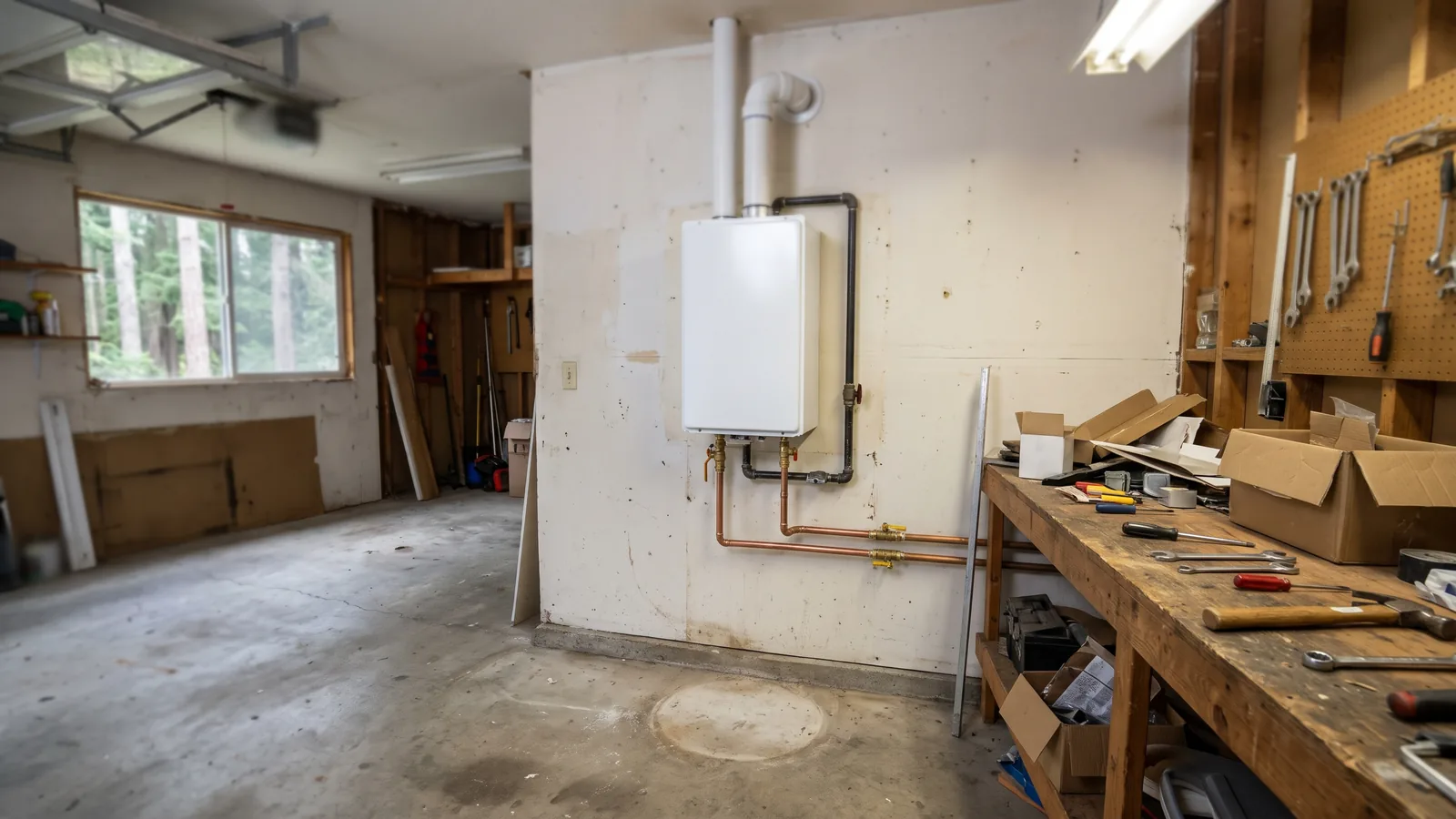
Tank to Tankless Conversion Routes for Kent Houses
The fuel you have now and where the tank sits decide which route the job takes. These five cover most of what a plumber sees when a tank comes out.
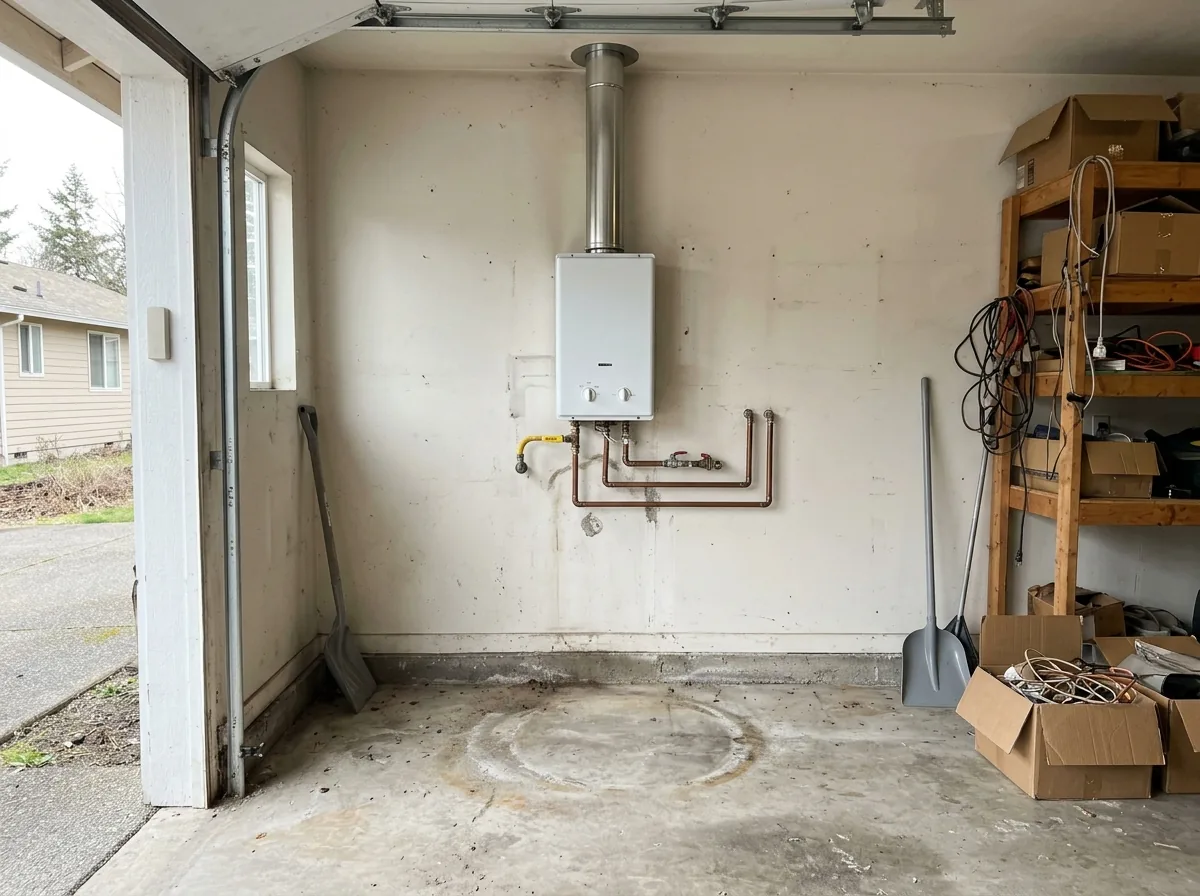
Gas Tank to a Non-Condensing Tankless
This is the cheaper gas route. HomeGuide puts a non-condensing install at about 25% less than a condensing one, and Navien rates its non-condensing units at up to 0.80 UEF. The catch is the exhaust: it stays hot, so Navien runs it through metal Category III vent pipe, and the tank's old vent can't be carried over. The venting page covers materials and wall clearances.
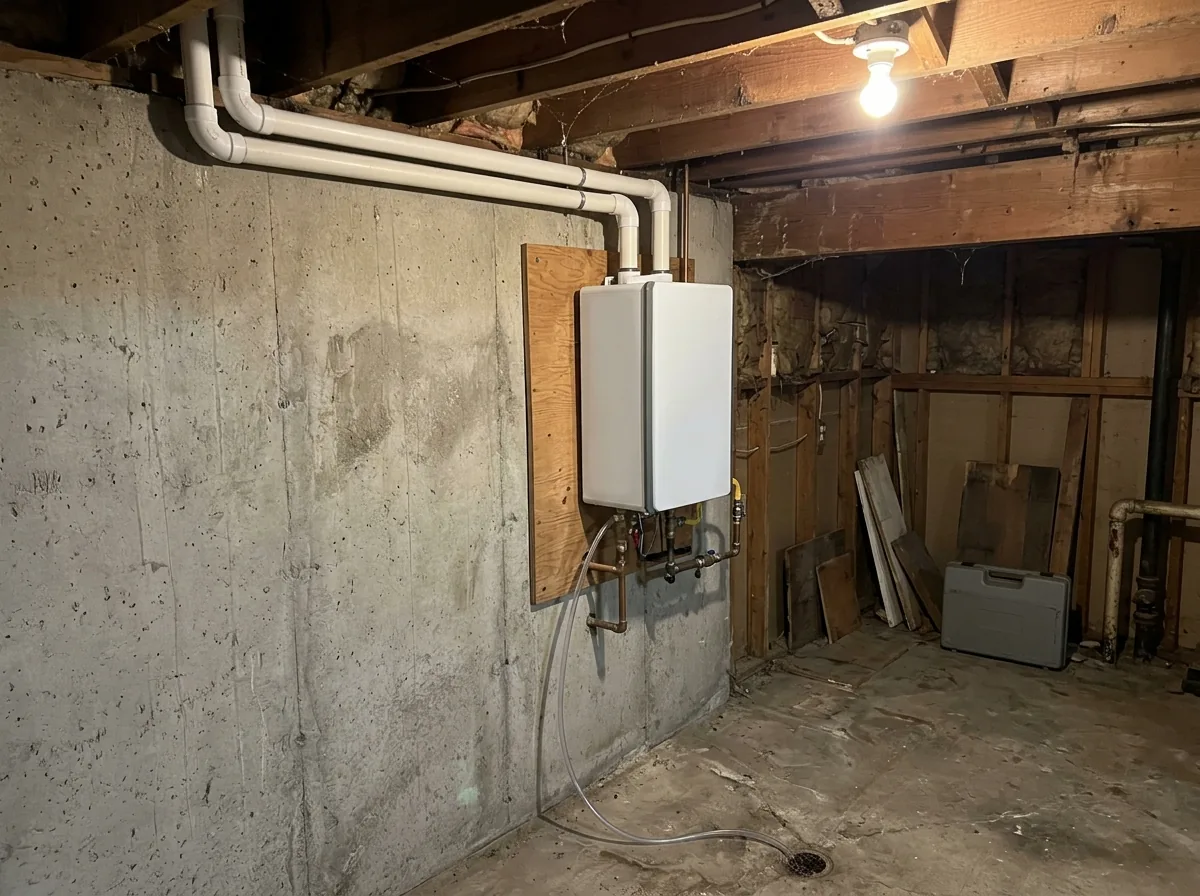
Gas Tank to a Condensing Tankless on PVC
A condensing heater wrings a second round of heat out of its exhaust. Navien's condensing line reaches 0.96 UEF, and because the exhaust leaves cooler, it can go out through plastic vent pipe. That makes it easier to route out through the nearest wall, though Rinnai warns that a vent built for a Category I tank may not suit a condensing heater. The trade-off is water. Its condensate is acidic, which puts one more item on the quote: a drain run to a floor drain or pump, often through a neutralizer cartridge.
From a 240-Volt Tank to an Electric Tankless
An electric tank and an electric tankless both run on 240 volts, but the load is not close. A whole-house tankless can draw enough current to force a bigger electrical service, so have the panel's main breaker rating and free slots checked before anything is bought. The amp draw, breaker and wire sizes by unit are on the electric tankless page.
Moving the Heater to an Exterior Wall
Hanging an outdoor-rated unit on the siding frees the floor space the tank used. Angi prices relocating a water heater at $150 to $3,400, depending on how far the pipes have to move. Rinnai's outdoor models need its own outdoor vent cap. With 120-volt power on, they protect themselves from freezing down to -4°F. If the power drops in a freeze, the unit has to be drained by hand, and the exposed pipes still need insulation.
Capping the Old Flue and Hauling Off the Tank
The new heater can't share the tank's old vent: Rinnai's manual forbids connecting its venting to an existing vent or chimney. So the old flue connection gets dealt with as part of the job, and the tank itself has to go somewhere. Hauling it off runs $75 to $500 on HomeGuide's numbers (what disposal involves), and some plumbers fold it into the install price, so check the quote line by line.
Why Kent homeowners and businesses call Kent Tankless Water Heater
- Your details go to a single independent plumber, not a list of bidders
- The referral is free, and booking is your call
- Ask for gas line, vent and wiring costs as separate lines
- Ask which Kent and L&I permits the job needs
- Keep the down payment small and pay as work is finished
Tank to Tankless Conversion Costs Beyond the Heater
Angi's labor table puts replacing one tankless unit with another at $600 to $1,900. A conversion adds lines that a like-for-like swap rarely has, and Angi's figures show how wide they run:
Gas line
$260 to $820 for a new line on average, and past $1,500 when an electric house switches to gas. Pipe sizing is on the gas line page.Electrical
$500 to $1,000 for a new line and sub-panel, and up to about $2,300 on complex jobs.Permits
$25 to $300 nationally. Kent's own rules and the earthquake strapping requirement are on the water heater replacement page.
A gas-to-gas conversion near the meter may need little electrical work beyond an outlet (Rinnai's gas units plug into a standard 120-volt receptacle); an electric-to-gas switch may need every line above.
Tank to Tankless Conversion Energy Savings
DOE's figures are the ones to plan around. A household using 41 gallons of hot water a day or less can see a tankless heater run 24% to 34% more efficiently than a tank. Near 86 gallons a day, the gain shrinks to 8% to 14%. The reason is standby loss: a tank keeps reheating stored water whether anyone uses it or not, and a tankless unit only fires when a tap opens. DOE adds that a separate unit at each hot-water outlet can save even more.
In dollars, HomeGuide puts a year of tank operation at $250 to $600 and a tankless unit at $220 to $540. It says the gap can repay the higher install price in 3 to 7 years, but it counts rebates in that estimate, and in Kent today there aren't any for gas tankless. A light-use household with a dying tank gets the most out of converting; a big family replacing a healthy tank gets the least.